Why Did I Almost Die? The Answer . . .

OLYMPUS DIGITAL CAMERAThere’s a reason for everything, right?

A little over two months ago, I woke up in the middle of the night with excruciating pain in my shoulder.  I couldn’t breathe without sitting up. Thanks to my wife, I went to the doctor first thing the next morning.

You know you’re in trouble when your doctor calls 911.  I got an exciting ride in an ambulance. In the ER, they diagnosed Bilateral Pulomonary Embolisms (blood clots in both lungs).  I was treated in the hospital for a few days, then began  a very slooow recovery at home. Every doctor I’ve seen since –  and I’ve seen at least seven – has looked at the report and told me how lucky I am. I’m still not 100% (some would argue I never have been). My impatience and frustration often overwhelm the thankfulness I know I should exude.

So why did this happen?

Obviously, God was mad at me. I had done something very wrong. Or maybe it was an accumulation of small commissions and omissions. God got fed up, reached down, and clogged my lung arteries.  Bad things happen because of the bad things we do, or because we fail to do good things. I just need to figure out what that thing, or those things, are, and repent, and everything will be okay.

That certainly makes sense. It’s fair. According to the Prosperity Gospel, God pours out material blessings on folks who please God (especially by donating generously to Prosperity Gospel ministries). Punishment for those at whom God is angry is just the commutative property (a+b = b+a . . . sorry, you didn’t know there was going to be math) in action.

I don’t like that explanation, though.  Here’s another I’ve heard  . . .

It’s the devil’s fault!  It’s Satan that’s pissed off. I’m doing such a good job as a Christian and especially a pastor that Satan conjured up some clots in my lungs to slow me down. My PE’s are arterial affirmation of my church’s proclamation that “God loves everyone . . . No Exceptions.”

Let us consecrate my condition!

That approach seems a little too self-aggrandizing.

So maybe it was just that God had some things to teach me. But I’m not thrilled with that explanation, either. Certainly there are things I can and even should learn from this experience (when I’m done feeling sorry for myself, maybe), but I just don’t see God throwing down some pulmonary embolisms so I’ll be a better Christian. That’s pretty harsh pedagogy. And I thought Mrs. Demerit in sixth grade was tough . . .

The truth is no explanation is going to be satisfactory.

The only honest answer to, “Why did I go through this?” is . . .

I don’t know.

===

My dad died when he was only 52-years old. I’m going to be 55 this month. I figure that’s three bonus-years so far.

I have said and written before that my dad’s death was one of the cornerstones of my agnostic/atheist outlook in my 20’s. A good man suffered for years – he had a triple bypass with a bonus stroke when he was just 42, and was diagnosed with cancer at 48 – and then died way too young. It was senseless, and seemed to confirm my conviction that belief in God was for weak, stupid people.

But something said by the pastor who ministered to my mom the morning she found my dad dead in bed stuck with me. It forms my ministry now that I am an unexpected pastor. As my mom told me later, that pastor said . . .

“I could try to tell you why this happened, but I won’t.  Because I can’t. There is no explanation. But I am here for you”

Beware  those moralizers who would explain God. Beware the pontificators who would interpret the real reason behind every event.  Notice that their explanations will only confirm their biases. Remember the TV pastors who said the devastation wrought by Hurricane Katrina was because of “the gays”?  How convenient that a hurricane would confirm their hateful world view.

Here’s what I know is not true:

“Everything happens for a reason.” Sometimes stuff just happens.  If there is a reason it is beyond our comprehension so it is irrelevant anyway. Attempting to figure out the “why” when trials and tragedies strike (as well as triumphs) is a waste of time.  The inevitable results are frustration and error.

Also, “God never gives you more than you can handle.” That bit of “wisdom” is not in the Bible.  It is proven false by experience. I know there are times when I’ve dealt with things beyond my ability to handle. The last two months for starters.

What I know to be true is that this world is messed up.

It is populated with people who are messed up – people like me and everybody else. Bad stuff happens. People get sick. They suffer. Sometimes evil seems to win. Injustice is rampant.

But that is exactly the world the Bible describes. A world gone wrong. Relationships with God and with each other scarred and torn.

In Jesus, God entered the world to put things right, to restore our relationships with God and with each other.  His violent suffering and death demonstrated that he entered  our messed up world, the real world. His resurrection proclaimed that evil does not have the last word.  And that even death does not have the last word.

Following Jesus is not insurance against bad stuff happening.

It is not a guarantee that suffering won’t occur. In fact, the Christian life lived faithfully in our messed up world might actually precipitate more suffering, or at least more inconvenience.

The assurance is that we won’t walk through this mess alone; that our messed-up selves will not separate us from God’s presence and God’s promises.  Following Christ is not just or even especially eternal life insurance . . . it is assurance right here and right now that we are not on our own.

Stuff happens that just plain sucks.

My recent health challenges,for example. There is no “why” for that, but there is a “Who” – God who was with me all through it, even though most of my prayers were complaints (in my defense, so are many of the Psalms).

Now I’m able to tell folks I’m getting better. Sometimes they respond, “God is good!”

The reality is that God would still be good if I hadn’t made it.

And God will still be good someday when I inevitably won’t.

Posted in Bible, Christian Living, Christianity, Questions | Tagged , , , , , | 9 Comments

“Family Dinner” – A Sermon for Maundy Thursday

Luke 22:1-27

There is something powerful about sharing a meal.

According to surveys, more families are eating together. The National Center on Addiction and Substance Abuse conducted a survey and found that almost 60% of families with children under 18 report eating dinner together at least five times a week – that’s up from only 47% 20 years ago.

And that’s a good thing. According to the Family Dinner Project, children in families that regular share meals have:

  • Better academic performance
  • Higher self-esteem
  • Greater sense of resilience
  • Lower risk of substance abuse
  • Lower risk of teen pregnancy
  • Lower risk of depression
  • Lower likelihood of developing eating disorders
  • Lower rates of obesity

Yes, there is something powerful about sharing a meal.

Growing up, I remember my family gathered around the table sharing how our day went, our successes, our failures, our concerns. Sometimes arguments broke out (usually between me and my sister or me), but we learned how to resolve our differences. After all, if we had to get along if we wanted to eat.

Big news got shared at family suppers. I still clearly remember the supper when I was 12 and my father waited until dessert to tell us we were leaving Virginia and moving to Florida that summer. There were questions and tears and reassurances.

Food is a big part of the life of a church family. We just finished 6 weeks of Soup and Bread Suppers. We gather for Men’s Breakfasts and Lunch Bunch lunches and fellowship time after worship all summer. Most funerals include a bereavement meal where folks eat and remember together.  If we want to celebrate something or honor someone, what do we do? We eat!

There is something powerful about gathering and eating together.

Like the host of one of those food shows on the Travel network, Jesus eats his way around Israel through the Gospel of Luke. Luke tells us about 10 times Jesus shares food with others – two of them after the resurrection (breaking bread with Cleopas and his friend on the road to Emmaus and later eating fish with his disciples).

The eight times Luke reports about Jesus eating before his death and resurrection always find Jesus gathered with others. Often what Jesus says at these meals is significant, and once the meal itself is a miracle (the feeding of the 5000), but what is remarkable about most of these gatherings is with whom Jesus chooses to eat.

The first meal in Luke is a banquet at the home of Levi, a tax collector also known as Matthew. The religious leaders are outraged that Jesus would eat at the home of such a person, and with Levi’s friends, who are also “tax collectors and sinners.”

Later, Jesus eats with “respectable” people at the home of a Pharisee, but he scandalizes them by allowing a woman Luke tells us has lived a sinful life to anoint his feet with her tears and perfume before wiping them with her hair.

Just a couple weeks ago Pastor Nicki preached about another dinner that raised the eyebrows of the folks who thought they were righteous – out of all the people who lined the streets to see Jesus in Jericho, he picked the tax collector in a tree, Nicodemus, to host him for dinner.

It seems Jesus will eat with ANYBODY. Jesus turns meals into not just scandalous but subversive acts. He challenges the conventions about who is worthy and who is unworthy, who is righteous and who is a sinner, who is in and who is out, just by reclining at the table with disreputable characters.

Tonight we remember Jesus’ last meal before his crucifixion, the ritual Passover meal we call, appropriately enough, the Last Supper. What a rag-tag group of folks gathered with Jesus in the upper room that evening. Not only tax collector Matthew but political revolutionary Simon the Zealot. There were the hotheads James and John. As far as we know, none of them were especially educated or wealthy or in any other way what the world considered successful. In fact they were probably looked at as quite the opposite, having given up everything to follow the itinerant rabbi.

But they didn’t get it, not even after receiving the bread and the wine, Jesus’ body and blood. Instead of pondering what it all meant, they would argue about which of them was the greatest.

Jesus knew they kept missing the point, and that they would all desert him later that evening. Yet they were all invited and included.

Peter was there. Peter whose impulsivity caused him to do and say embarrassing things. Peter who Jesus knew would deny even knowing Jesus a few hours later. He was invited, and included.

As was even Judas. We don’t know anything about Judas’ life before he met Jesus. We do know that he was a thief – John tells us he stole from their communal funds. And we also know that he would betray Jesus on that very night.

Jesus knew it, too.

Jesus – and the Gospel writers – make it clear Jesus knew Judas was going to betray him.  That shows us that Jesus knew exactly what was going to happen to him, that he was not surprised but walked willingly to the Cross. But it also shows us the kind of table fellowship Jesus practiced throughout his life he maintained even at the Last Supper.

If anyone ever deserved to be re-accomodated – that’s forcibly removed in United Airlines Speak – from the dinner table, it was Judas.

But he was right there, when Jesus broke the bread, and blessed it, and shared it.

And said, “This is my body, given for YOU.”

What must Judas have thought when he heard that? What must he have felt when the bread came around to him and he ate it.

And Judas was right there when Jesus took the cup and said, “This cup is the new covenant in my blood, which is poured out for YOU.” According to Luke Jesus went on, “But the hand of him who is going to betray me is with mine on the table. 22 The Son of Man will go as it has been decreed. But woe to that man who betrays him!”

What must Judas have thought and felt then, knowing that Jesus knew what he was about to do. And yet Judas still drank the wine. He was still included.

So are we.

Every time we celebrate Communion, every time we break the bread and pour the wine, every time we receive the body and blood of Jesus Christ, we hear those words.

“FOR YOU.”

There are times when we may not feel you deserve Jesus’ invitation. We may never feel worthy.

Here’s the truth . . . we aren’t. None of us are.

But that’s why Jesus invites and includes us. That’s why he invited the tax collectors and the sinners and the betrayers and the deniers and deserters.

Because they – and we – need Him. We need the forgiveness we receive in this meal. We need to remember what he did for us. We need each other – to gather around the table, around the altar, together.

And we need to remember that Jesus invites everyone, no exceptions.

Finally, we need the glimpse of the future this meal provides. Holy Communion is “a foretaste of the feast to come,” a hint of the eternal feast Jesus invites all of us – and everyone – to share.

Yes, there is something powerful about sharing a meal.

AMEN

Preached at Christ Evangelical Lutheran Church of Millersville
Maundy Thursday (April 13), 2017

(NOTE: Theologians, and even perhaps the Gospel accounts, differ over whether Judas participated in the sharing of bread and wine at the Last Supper. Luke’s version, upon which this sermon is based, seems to indicate that he did. As the sermon makes clear, that is my supposition as well.)

Posted in Bible, Christianity, Sermon, Uncategorized | Tagged , , , , | 3 Comments

The Unexpected Pastor’s Best Picture Countdown 2017

2017-oscar-nominees

Every year I rank the films nominated for Best Picture. As always, these are not predictions nor is the order based on films I “liked” the most, but rather my opinion of which films are most worthy to win the Best Picture Oscar. Tune in Sunday night to see if the Academy of Motion Picture Arts and Sciences voters agree with me (probably not!).
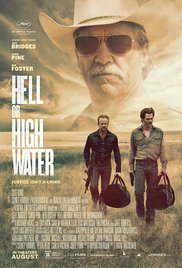
hell-or-high-water9. Hell or High Water

“Hell or High Water” has a 98% Fresh rating on Rotten Tomatoes, so maybe you shouldn’t listen to me. But I’ll tell you anyway – I was underwhelmed by this film. It aspires to be “No Country for Old Men,” which did win the Best Picture Oscar in 2008. “Hell or High Water” will not, and should not. In my contrary to the critics’ opinion, it shouldn’t even be nominated.

I found “Hell or High Water” to be draggy and derivative. The best thing the film has going for it is the beautiful emptiness of the West Texas scenery in which it takes place; for me it was metaphoric of the emptiness of a film that attempts to transport the Robin Hood trope into a 21st Century where banks prey on “little people” and deserve to be robbed.

Jeff Bridges is nominated for Best Supporting Actor. He is one of my favorite actors and has delivered Oscar-worthy performances in films such as “Fearless,” “The Fisher King,” and even “The Big Lebowski.” But not here.  The time should be past when we are subjected to – and encouraged to admire – a lawman with “cute” racist banter who really has a heart of gold.
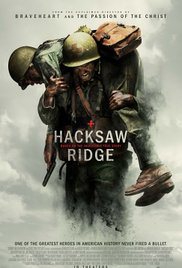
hacksaw-ridge8. Hacksaw Ridge

The day after we saw “Hacksaw Ridge,” my wife Karen texted me, “Great story. Okay film.”

That’s how I feel. The story of Desmond Doss is one of those inspirational tales that would be rejected as unbelievable if someone made it up. Doss was a Conscientious Objector – or Conscientious Cooperator as he preferred – who refused to carry or even touch a gun during World War II but saved 75 men singlehandedly at the Battle of Okinawa. Doss’s story raises questions about the practicality and morality of pacifism.

The film of the story is marred by Mel Gibson’s direction. Gibson’s obsession with violence and even horror-film level gore is not new to “Hacksaw Ridge.” “Apocalypto,” “Braveheart,” and especially “The Passion of the Christ” exhibited the same kind of pornographic fixation with carnage. Portraying the reality of war can be edifying. But exploding bodies, disembodied intestines, bullets entering skulls, beheadings, and the like filmed in artful slow motion and accompanied by swelling music in “Hacksaw Ridge” might provoke a blush from even Sam Peckinpah.

“Hacksaw Ridge” does have its merits. The early scenes in Appalachian Virginia are rescued from Mayberry cliché’ by their gritty depiction of Doss’ dysfunctional family headed by his violent, alcoholic father. Andrew Garfield gives his portrayal of Doss some heft and avoids what could have been Gomer Pyle or Forrest Gump in World War II.  But the flaws of “Hacksaw Ridge” – particularly its Gibsonian excesses – preclude its recognition as Best Picture and a higher place on my list.

arrival7. Arrival

“Arrival” is the only Best Picture nominee I have seen twice. Perhaps the greatest compliment I can give the film is that I enjoyed it just as much the second time, even though I knew the twists and resolutions that were coming. I appreciated understanding how expertly it all fit together.

How can a nerd like me not appreciate a film where a major plot point hinges on the conversion of a repeating decimal into a fraction? Or how can an English major not appreciate a film that delves into the complexities and ambiguities of language?

“Arrival” is refreshing because it is about aliens who come to earth, but it is not a shoot-em-up like “Independence Day” or similar big-budget sci fi films. “Arrival” is more reminiscent of “Interstellar” (though not as impenetrably complex) or especially “Inception” (without the ham-handed “love is the strongest force in the universe”).  Love does figure in “Arrival;” one of the questions it raises is whether love is worth the inevitable pain caring for someone else brings.

The makers of “Arrival” did not have a Christopher Nolan level budget. They managed anyway to convey an intriguing plot and also an often beautiful film, all muted colors with sometimes sweeping shots despite its mid-budget limitations.

“Arrival” is nominated for eight Oscars, and although it is probably not a serious contender for Best Picture, it may rightfully earn some technical awards.

lion.jpg6. Lion

26-year old Dev Patel’s career has been bookended by Best Picture nominees. In 2008, he debuted as the featured character in “Slumdog Millionaire” which won the ultimate Oscar. Now here he is starring in “Lion”

“Lion” is true story that could have ended up a manipulative melodrama but turns out to be a genuinely moving film with authentic performances and gorgeous cinematography. The early scenes of a five-year old adrift in a Dickensian India are the most effective. The second half, in which the grown up child tries to find his home using his memory and Google Earth, is mostly treading time until the emotional payoff at the end. I admit to a moist cheek.

Patel and Nicole Kidman as his Australian adoptive mother are both nominated for supporting Oscars, but it is Sunny Pawar as the five-year old who captures the heart and soul of the film.

“Lion” and the also-nominated “Moonlight: take place in very different milieus, but both are at their core about their protagonists’ search for identity.

“Lion” won’t – and shouldn’t – win the Best Picture Oscar. But the Original Score that is among its six nominations should be honored on Sunday.  The music is so good from the outset that I was already watching the opening credits to see who composed it (Dustin O’Halloran and Hauschka).

fences5. Fences

Eight performers have won a Tony then later an Oscar for the same role. Never have two from the same play/film done it, but that could change this year when Denzel Washington and Viola Davis will be strong contenders for the Best Actor and Actress Oscars after winning Tony’s for the 2010 revival of “Fences.”

Their powerful performances, as well as those of the rest of the cast, are the most obvious reasons “Fences” is an excellent film, but August Wilson’s play with its gritty, sometimes poetic dialogue is, as Shakespeare wrote, “the thing.”

Washington’s direction is not as strong as his acting . . . there are some questionable quick edits and unnecessary close ups, but that is more than made up for by his – and especially Davis’s – brave, raw portrayals.

Although there are plenty of heartwarming moments and even laughs, this is at its heart a play/film about wasted potential. The causes are varied, but perhaps the most notable thing about “Fences” is that Wilson’s creation and the performer’s execution of these wounded and often self-defeating characters make them all sympathetic in spite of their failings. We even empathize with Denzel Washington’s Troy, who is despicable in many ways, as he says indirectly over and over that he is doing the best he can.

“Fences” is not the best film I’ve seen this year, but it has top to bottom the best performances of any ensemble I’ve witnessed on screen in quite some time.
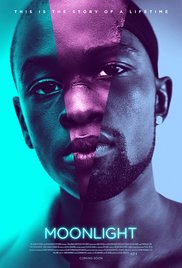
moonlight4. Moonlight

Film at its best heightens empathy. We are invited to think, and especially to feel, along with characters whose backgrounds and perspectives are sometimes wildly different from our own. Film can help to break down barriers of misunderstanding and fear based in the unknown.

“Moonlight” is a sterling example of a film that fulfills this vital empathetic role. It took me into worlds and experiences with which I have no experiential familiarity and little understanding. Although the budget was clearly limited, its stripped-down, raw ambiance directs focus on reality as it is lived by its characters.

At its essence “Moonlight” is about its protagonist’s – Chiron’s – struggle for identity. But “Moonlight” embraces the humanity of all of its characters, even those whose choices are poor and sometmes illegal. Chiron’s drug-addicted mother is one such character; the film’s power, as well as that of her portrayal (by Naomie Harris), is reflected in the anger at her and sorrow for her that is evoked simultaneously.

Go see “Moonlight.” I don’t believe it is the Best Picture of the last year, but it may be the most important. It is a vital and a crucial part of the conversation we need to have at this moment in which empathy for those who are somehow “other” can seem a rare commodity.

la-la-land3. La La Land

At the end of Sunday’s Oscar ceremony, the producers and cast of “La La Land” will probably be gathered on the stage, hoisting the Best Picture Oscar.

It would not get my vote, although it is an enjoyable if somewhat ephemeral experience.

From its opening title, a vintage-looking “PRESENTED IN CINEMASCOPE,” “La La Land” captures the spirit of the golden age of Hollywood musicals. Ryan Gosling is no Fred Astaire or Gene Kelley, but he does an adequate job of singing and dancing. Emma Stone as an aspiring actress is similarly not the triple-threat any number of Broadway actresses may have been, but she and Gosling have a great chemistry and elicit the audience’s rooting interest in their respective dreams.

The music is mostly delightful but there is only maybe one tune that stuck with me after I left the theater.

The plot focuses solely on the two leads; that no other characters are developed results in a vaguely unsatisfying thinness. “La La Land” is never quite as exhilarating as its first big number set in an LA traffic jam, and never as fantastic, in both the “awesome” and “fantasy” meanings of the word, as the last 5 minutes or so.

“La La Land” is a film to see on the big screen to fully appreciate its colorful splendor; here’s another Oscar prediction – Linus Sandgren will win Best Cinematography for this exquisitely colorful film.

hidden-figures2. Hidden Figures

I was more surprised by “Hidden Figures” than by any other nominated film. Although its story of African American women who were mathematical geniuses at NASA sounded interesting and inspirational, I was not prepared for a film that so fully transcended the myriad interesting and inspirational films that get produced.

The script and direction are at times earthbound, but the three lead actresses are stellar and propel the film into outer space. Taraji P. Henson should have been nominated for a Best Actress Oscar. Octavia Spencer’s nomination for Best Supporting as Actress is well-deserved. And Janelle Monae deserves SOME kind of recognition for her outstanding work in both this film and another Best Picture nominee, “Moonlight.”

The dynamic trinity of actresses portray women who manage to rise above the injustices inflicted by the segregated society in which they live, but only by enduring dehumanizing indignities.

“Hidden Figures” offers vital lessons about the dangers of building walls of division based on race or gender or any other superficial trait; not only do those barriers hurt those who are excluded, they also deprive those doing the exclusion of the gifts and talents those on the other side of those walls have to offer.

“Hidden Figures” is an amazing story of determination and resilience. Rated PG, it is an important film for families to view together and then discuss not just the negative effects of prejudice, but especially the positive example of three powerful role models who happen to be African American women.
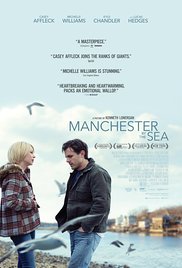
manchester-by-the-sea1. Manchester by the Sea

I wavered and waffled over the order of films ranked 2-7 on this list. Numbers 8 and especially 9 were easy choices for the tail end.

But the easiest choice was “Manchester by the Sea” for the Best Picture of 2016.

A Best Picture should exemplify the epitome of film in which the sum of the parts – directing, screenwriting, editing, acting, and so on – synergize into much more as a whole.

“Manchester by the Sea” is just such a film. It is a Masterpiece by the Sea.

But “Manchester by the Sea” is not a film I am anxious to see again.  Its bleakness is devastating because of its honesty. There are no easy answers and people behave like authentic human beings rather than movie characters. Everyone is fallible, but all have some redeeming features. The tragedy is when they cannot find that redemption, either in themselves or anywhere else.

The acting is consistently Oscar-worthy, especially Casey Affleck, Michelle Williams, and newcomer Lucas Hedges. There is humor in “Manchester By the Sea” as there is in real life. But the humor does not fix everything or really make it better. There are no villains in “Manchester By the Sea,” only the banal destructiveness of unfortunate circumstance.

Ultimately the story is one of people doing the best they can in the ruins of tragedy, but how the best we can do is not always enough . . . especially not for ourselves. There is hope in the end, though certainly not the typical Hollywood Happy Ending.


And One Bonus Recommendation . . .

hunt-for-the-wilderpeopleThe Film I Most Enjoyed in 2016

Every once in a great while I come upon a film that totally surprises me not just with the way its plot progresses but with its charm and wit and humanity. “The Hunt for the Wilderpeople” is such a film. I guess I shouldn’t have been surprised, it has a 97%  on Rotten Tomatoes. But don’t take my word for it or the critics’ word for it, see this film on DVD or pay per view! It is funnier than any big-budget summer comedy, and is more engrossing – and certainly more real – than any superhero movie. As a pastor, I also appreciated the most bizarre funeral sermon ever put on film. Oh, and the beautiful New Zealand bush-country is worth seeing for its “majestical” (you have to see the film) quality. “The Hunt for the Wilderpeople” is definitely influenced by some of my favorites – especially Wes Anderson and a little Monty Python – but it is a fantastic, original creation.

 

Posted in Arts and Culture, film, Movies | Tagged , , , , | 3 Comments

On the Pre-Inauguration Sermon

I just read the sermon preached at the new president’s church service this morning. Its hagiography left me confused as to who was being worshiped (“You ended up garnering the most votes of any Republican in history.”/ “I don’t believe we’ve ever had a president with as many natural gifts as you.”). Its theology was devoid of Gospel and limited to “God likes walls.”

The word “wall” appeared six times. Here are six words that did not show up at all:

Mercy
Grace
Love
Hope
Peace
Forgiveness

And one more that was mysteriously absent from this Christian pastor’s sermon:

Jesus

I post this not as a commentary on the new president, but as a reminder to Christians and especially to non-Christians that many so-called Christian leaders have confused, conflated, and even cut out the Gospel in their quest for power, prestige, and popularity.

As a pastor, I am deeply disappointed that with the entire library of Scripture at his disposal and the opportunity to share the Gospel of God’s grace with the new president and a listening world, this morning’s preacher chose to lift up wall-building Nehemiah rather than Jesus, who tore walls of division down.

Sad!

Posted in Christian Living, Christianity, Christianity and Culture, Sermon | Tagged , , , | 1 Comment

Making the Devil Mad (or something like that)

The funeral last week celebrated the life of a dear 84-year old woman who I will especially miss because she lived on the route I take daily to walk my dogs.  Before it got too cold in the past few days to walk my pair of short-haired little Italian Greyhounds, they would look up at her porch as we walked by, looking for her.

Even at 84 her death was a shock, one of those messy end of life situations where emotions are a muddled mix of sadness and anger fueled by questions about circumstances and the care she was receiving.

When I met with her family to plan the funeral, a daughter asked if we could sing Christmas hymns.

“Certainly not,” I replied. “It’s Advent. In the Lutheran Church we don’t sing Christmas songs until Christmas.”

Not really. Although there are some pastors who might say something like that . . .

What I did was the most important thing a pastor can do. I listened.

The children shared with me how special Christmas was for their mom.  The daughter went on to tell me that another pastor had once said, attributing the quote to Martin Luther, that “The devil gets mad when we sing Christmas carols at a funeral.”

I had never heard that particular Martin Luther quote. He said and wrote a lot, but he’s sort of the religious analogue to Abraham Lincoln – he gets credit for plenty of stuff he didn’t actually say.

It certainly sounded like something Luther might have said; if not Lutheran than perhaps Lutherish. He did write often about how to repel the devil. Here’s a personal favorite: “But I resist the devil, and often it is with a fart that I chase him away.”

So at Saturday’s funeral we sang Christmas hymns. After we read Luke’s Christmas account and I shared my homily emphasizing the hope of the manger even in the midst of grieving, based on Luke’s account of Jesus’ birth, we sang Silent Night.

But it was “Hark the Herald Angels Sing” at the end of the service that felt like a defiant proclamation of joy, as we raised our voices and sang . . .

Hark the herald angels sing, “Glory to the new-born king.”

We sang in defiance of death itself, proclaiming the king born in a manger had defeated sin and death once and for all.

Peace on earth and mercy mild, God and sinners reconciled.

We sang for all of us, and for all of God’s children, reconciled to God in Christ, our relationship restored through the forgiveness of our sins.

Joyful all you nations rise. Join the triumph of the skies.

We sang our joy, even as we gathered because someone we loved had died. We sang our joy, even when it didn’t make sense.

With angelic hope proclaim, “Christ is born in Bethlehem!”

We sang the hope of Christmas, God in human flesh placed in a manger.

Hark! The herald angels sing, “Glory to the new-born king.” 

I don’t know if the devil got mad. But we gathered there and sang our solidarity with each other as Jesus is in solidarity with us. We proclaimed that we are not alone in this messy world or in the messiness of our lives.

We sang about something bigger and better than death or disappointment or despair . . . we sang our hope.


(This post is adapted from an excerpt of a sermon preached for the Blue Christmas service at Christ Lutheran Church on Wednesday, December  14, 2016.)

Posted in Christianity, Christmas, Church, End of Life, Martin Luther | Tagged , , , , | 1 Comment

An Intersection, a Truck, and the Randomness of the Universe (and God, too)

So this happened . . .

I’m waiting to turn left at a long red light. There are two left turn lanes; I’m in the one on the right. A grey van is on my left. It’s not pulled all the way up, so I can see the oncoming traffic. Midnight Oil’s “Beds are Burning” blares from my radio tuned to the First Wave satellite channel. I’m thinking about what I need to do the rest of the afternoon, and about the sermon I just started writing at Panera Bread.

The light finally changes.

I pull forward. The van stays a little behind.

I’m always in a hurry to get where I’m going. Usually I would hit the gas and get moving. But I have seen the aftermath of shattering crashes at this intersection. So I wait a beat.

A mammoth red tow truck barrels toward the intersection from the left. I can’t tell for sure if it’s slowing down. The van beside me pulls forward. He must think it’s safe.

I start.  The van stops, and so do I – again I am just ahead and my view is not blocked.

The red truck makes it to the intersection. He’s not stopping! There’s not even a tap on the brakes.

It registers that the van was moving again. My only thought is “Van! Stop!”

And it did.

The truck roars through, at least 50 miles per hour, the driver oblivious even to my horn’s long fruitless bleat.

If I hadn’t seen the accidents before, I would have hit the gas immediately.

But I had seen them, and I waited.

If the van had pulled all the way up to the line next to me, my view would have been blocked and I probably would have gone ahead when the light changed. Would I have been able to stop in time?

But the van stayed just behind, just enough for me to see the oncoming danger.

Often I drive like I go through a lot of my life, on absent-minded auto-pilot, lost in thought.

But this time I was alert.

I punch my arm to make sure I didn’t die in a crash and am now living in a post-death dream.

“Ouch!”

I’m okay!

God, you must still have work for me to do.
You’re not done with me yet.
I’m not done.
Thank you.
The time will come when I’m not paying attention.
When the van does pull up and blocks my view.
When it’s too late to brake.
Either literally or figuratively.
Like everybody, I’m booked for a limited engagement.
My run may be periodically extended.
But someday my show is going to close.
The sets will be struck, my costumes and props will be trashed or auctioned.
But not today – at least not yet.
Thank you God for the most precious gift of all.
Time.

So I go to post this on Facebook with a reminder to look both ways before proceeding after a red light.

But the first thing I see is this:

Someone has posted a note they got from the principal of their kids’ school this morning. Two other kids got killed and two more injured in an auto accident at an intersection.

What the hell?

I’m a pastor. My degree says I am a “Master of Divinity.”

But don’t ask me to explain that.

Of course the two incidents are not related. I don’t know the kids or their families. We are separated by hundreds of miles and only connect in some Facebook Venn diagram of random acquaintance.

But still . . .

I ask myself (and God?) why some middle-aged pastor is spared while two kids are not.

There is no answer, or more exactly no explanation. God’s only response is the one Job got, “Where were you when I created the universe,” etc.  Or the one spoken by Isaiah, “God’s ways are not our ways” and so on.

This is of course inadequate. But it is also the wrong way to proceed.

God is not some cosmic puppeteer pulling our strings or even a divine director guiding us through some tragic script.

I shared this story with a group of folks, and one of them said, “You don’t know what those kids had done. Maybe they had done something really bad.”

No!

If that’s the way the world worked, then I would have gotten flattened by that truck long ago.

And so would you.

One more thing God is not – a celestial death panel.  Father, Son, and Holy Spirit do not convene and decide who deserves to live and who will be deprived of transcendental life support.

Everyone suffers. Some of it is self-inflicted, some intentionally imposed, but some suffering just seems random.

And maybe it is.

God is certainly in control, but in God’s sovereignty is the provision for free will.

At the sub-atomic level that makes up everything – including us – there is uncertainly and yes randomness.

These things do not destroy or even threaten my faith. They do not speak of the absence of God or the impotence of God, but rather of the way God chooses to deal with the universe.

With me.

In spite of the many mistakes I’ve made, the way I’ve used my free will to squander much of the time I’ve been given, in the randomness of this messed-up world where kids on their way to school die in car crashes and middle aged pastors live another day, God has been there.

God has been here.

God was with me when I stopped short of being crushed by a tow truck.

God will be with me the day when I don’t stop in time.

It is not blasphemy to acknowledge the fickleness and especially the impermanence of life in this world.

But I will not face that on my own.

In a world filled with variability, God is the Constant.

God is my Constant.

Posted in Christianity, Faith, Questions | Tagged , , , | 1 Comment

Unexpected Advent Reading: “The Stand”by Stephen King

the-standWhen I began to reread Stephen King’s The Stand a couple of weeks ago, I didn’t realize it was perhaps the ideal book for this season of Advent.

During Advent, our worship Scripture readings traditionally mix prophecies about the coming Messiah with apocalyptic visions of His return.

The Stand is nothing if not apocalyptic.

In his introduction to the 1990 version of the novel, King called his work “a long tale of dark Christianity.”

I totally missed the Christianity part the first time I read The Stand.  The sixteen-year old me just thrilled at the saga of a small group of nondescript individuals who ultimately go on a quest to defeat the darkest evil. Sounds like The Lord of the Rings, doesn’t it? There is general consensus about the Christian themes pervading Tolkien’s trilogy. The Stand’s theological foundation may not be as apparent or as well-known, but after reading it again I am convinced it is just as valid.

In a way The Stand is my Lord of the Rings. As an adolescent, Frodo and his friends never engaged me the way their story transfixed many of my fellow-nerd friends. But The Stand resonated because it felt so real, so about the America I thought I knew beyond my sheltered suburban sphere especially from television and movies. Stephen King’s constant brand name-dropping has been the target of derision by critics, but to a kid saturated by television and especially its ubiquitous commercials and ear-worm jingles, characters resonate when they never take an aspirin but reach for an Excedrin, open the Frigidaire instead of a generic refrigerator, and wipe their noses not with tissues but with Kleenex.

As awesome as I found the battle of good versus evil and the gory parts and the scary parts, it was ultimately the characters that set The Stand apart from anything I had read before. Although the minor characters are often generic types that serve to propel the plot, the primary people grow and change as they struggle internally with good and evil. As a 16-year old, I could admire Stu and Larry while I hoped to grow into a brave leader like they became despite their limitations, and I could hope I didn’t have as much Harold in me as I feared (after all he wanted to become a famous writer and to get a girlfriend – not necessarily in that order – just like me).

King has said he gets letters asking about the characters’ lives now, as if they were real people. I kind of get that – it had been over 30 years since I’d read The Stand, and I remembered the characters probably more clearly than I recall some of my high school classmates.

I admit being a little reluctant to revisit the plot and people of The Stand.  Most of us who have crept into middle age have had the experience of watching a movie or reading a book that seemed earth shattering to our younger selves, only to be disappointed as we experienced our memory deflated before us. (I’m looking at you, “Logan’s Run.”). The expanded version of The Stand also was a little intimidating; it’s now well over 1000 pages after King added 400 pages that had been excised at the insistence of his publishing company when it was first released. But my 19-year old daughter had never read The Stand, and I thought she’d like it, so I told her I would read it again if she would give it a try.

The Stand more than stood the test of time and experience. In fact, time and especially experience deepened its impact.

When I read The Stand the first time, I was in the last throes of my relationship with God and the church. The Christian infrastructure of the plot didn’t interest me at all.

But now, rereading the novel through the lens of an unexpected Christian and pastor, I couldn’t help but recognize and appreciate not only the theological undertones (and overtones) in The Stand, but also the theological questions with which King wrestles in the book.

Like the Bible, The Stand is an epic clash between good and evil. But – also like the Bible – The Stand confronts but does not fully resolve issues like free will and the inscrutability of God and the problem of evil (if God is all good, all knowing, and all powerful, why is there evil?).

God is a primary character in The Stand. God is always there, behind the scenes, and even overtly – the “hand of God” makes an appearance in the climax. God has a plan, but it is never fully comprehended and it is always up to people to enact that plan . . . or not.

People are not merely chess pieces moved about by God. Free will works both ways. Characters in The Stand are free to choose to act in ways that advance God’s good plan or that work against it.

At a pivotal and deadly moment, a voice is heard saying, “This is Harold Emery Lauder speaking. I do this of my own free will.” Harold in particular struggles with who he is and who he will be and especially who he will serve. There are multiple times when Harold is portrayed grappling with his choices . . . with his will.

When Mother Abigail sends the small band west to confront Randall Flagg, those who have been selected for the quest ask if they have a choice. She answers, “There’s always a choice. That’s God’s way, always will be. Your will is still free. Do as you will. There’s no set of leg-irons on you. But . . . that is what God wants of you.”

It is of course in Mother Abigail that God most plainly shows up in The Stand. She is the book’s Moses. She is the reluctant prophet and leader of a people in the wilderness:

Her place was not to judge God, although she wished He hadn’t seen fit to set the cup before her lips that He had. But when it came to the matter of judgment, she was satisfied with the answer God had given Moses from the burning bush when Moses had seen fit to question. Who are you? Moses ask, and God comes back from the bush just as pert as you like: I Am, Who I AM. In other words, Moses, stop beatin’ round this here bush and get your old ass in gear.

Like Moses, she is frustrated by the people she has been called to lead and even more aggravated with God. She rails against the apparent cruelty of God, found in the Bible especially in the Old Testament:

I have harbored hate of the Lord in my heart. Every man or woman who loves Him, they hate Him too, because He’s a hard God, a jealous God, He Is, what He Is, and in this world He’s apt to repay service with pain while those who do evil ride over the roads in Cadillac cars. Even the joy of serving Him is a bitter joy. ‘Abby,’ the Lord says to me, ‘there’s work for you to do far up ahead. . .  And in the end, your reward will be to go away with strangers from all the things you love best and you’ll die in a strange land with the work not yet finished. That’s my will, Abby,’ says He, and ‘Yes Lord,’ says I, “Thy will be done,’ and in my heart I curse Him and ask ‘why, why why?’ and then the only answer I get is ‘Where were you when I made the world?’”

Not only do clear Mosaic references abound in that short excerpt, but also The Garden of Gethsemane and Job get thrown in for good measure. In fact The Stand echoes Job’s struggle with suffering throughout – within the overarching battle between good and evil (a bet between God and Satan in Job), people suffer.

Like Moses, Mother Abigail is not allowed to see the end of the journey. Moses was denied entry into the Promised Land because he takes credit for bringing water from a rock; Mother Abigail similarly identifies her sin as pride. Neither Moses nor Mother Abigail’s fate seems fair, but God’s ways are not our ways, etc.

But God in The Stand is more than the apparently cruel and capricious God of the Old Testament.

There is real grace in The Stand.  And faith.  As a Lutheran Christian – saved by grace through faith – those themes certainly resonated.

In an interview with Salon Magazine, King said he wrote The Stand “to explore what it means to be able to rise above adversity by faith, because it’s something most of us do every day. We may not call it Christianity. I wanted to do that, I wanted it to be a God trip.”

The heroes in The Stand are not chosen because they are exceptional. They do not have super powers or great intelligence or especially great faith. At least two of them are professed atheists/agnostics. But God uses them anyway, and by the time of the climactic confrontation those who make the stand against evil not only have received the gift of faith but publicly share it.

One of them, just before he dies, even echoes Jesus on the cross (“Father forgive them, for they know not what they do”) when he says to the man about to kill him, “That’s all right . . . You don’t know any better.”

God may not always prevent suffering, but God graciously gives those he allows to suffer faith and it is ultimately faith that saves the world. Or at least what’s left of America.

Sacrifice is at the heart of Christianity. The sacrifice of Jesus is central to salvation. Followers of Jesus are called to sacrifice to further their faith as well as the kingdom.

Sacrifice is at the heart of The Stand. Ultimately it is sacrifice that will be called for to defeat evil. Characters who desire to serve good are called to sacrifice.

As in the Christian narrative, strength is embodied in weakness.

The character that most embodies the Christian journey is Larry Underwood. He is clearly, in Christian parlance, a “sinner.” Or, in the words he keeps hearing in his head, he knows “You ain’t no nice guy.”  But Larry is refined through the crucible of the plague and its aftermath. He takes a harrowing hike through a long tunnel filled with corpses and comes out the other side. He completes a purifying walk in the wilderness before fulfilling his purpose. Larry’s problem is that he is human – he is flawed, especially in his selfishness. But over the course of the book he becomes someone God can use. More surprising, he develops into someone who is willingly used despite the possible – probable – consequences.

Larry and the others who make up the heroic band in The Stand ultimately embody an essential element of Christian theology precisely because they are so human, so absolutely unheroic. Throughout the Bible unremarkable people are used by God to do great things – the little shepherd boy who grows up to be Israel’s greatest king (David), the fishermen who follow Jesus and spread the Gospel (the disciples), and on and on. The characters whose God-given quest is to defeat the evil embodied in Randall Flagg are of the same ilk.

Of course the Hero of the Bible is similarly non-descript. It is a baby placed in an animal feeding trough after he is born to a poor family in occupied territory who would grow up to save the world. Because He does not appear in The Stand, it would go to far to say that it is a “Christian novel.” But certainly the themes it explores are most certainly Christian, and it can provide an interesting and unexpected starting point for discussion of those themes.

Especially, perhaps, during Advent.


A word of caution . . . The Stand is a secular book written by a secular author. As with most Stephen King books, there is violence, gore, sexual situations, and language that may be offensive. Please take your own sensibilities into consideration if you are thinking about reading the book . . . in other words, don’t blame me if you find it offensive. Despite all that, it remains one of my favorite books. Your mileage may vary . . .

Posted in Bible, Christian Living, Christianity, Christianity and Culture, Faith | Tagged , , , , | 3 Comments

After the Election: A Pastoral Letter

Like many congregations, the people I serve as pastor are of diverse opinions about politics . . . and many other subjects. After the election last week, I wrote this letter to the congregation, emphasizing our unity in baptism and in mission. It was distributed in worship on Sunday, as well as by e-mail . . .


“Rejoice with those who rejoice; mourn with those who mourn.” – Romans 12:15

Dear Christ Lutheran family,

What a week, huh? We have experienced democracy in action and can certainly be thankful we live in a country where we have a voice in the leadership and direction of our government. On this Veterans Day weekend, we are reminded voting is among our freedoms that have been defended by those who have offered themselves in service to our country. Let us thank God together for their service, past and present.

The election results portend change in our government and its policies.

But the election changes nothing in our church.

Just as before the election, we are a congregation of Democrats, Republicans, Greens, Libertarians, Independents, and those of other affiliations or no interest at all in politics. I believe that is a good thing. God does not fit in the box of any political party (or nation for that matter). The way a person votes – or doesn’t vote – doesn’t make them any more or less a Christian than anyone else.

We are stronger as a congregation because of the diversity of opinions about how to live out our faith. We can learn from each other.

But we must listen to each other, and otherwise put our love for one another into action.

In his explanation of the Eighth Commandment, Martin Luther writes that as Christians we are called to “speak well (of our neighbor) and to explain everything in the kindest way.” That is especially important regarding those with whom we disagree. What we must not do is impugn the motives – or the faith – of sisters and brothers who have come to different conclusions.

The Romans verse above  encourages God’s people to “rejoice with those who rejoice” and to “mourn with those who mourn.” It is a call for empathy based in a desire to understand the feelings of those with different reactions to the election. Please be patient with those who mourn; grief is a process with no set time period.

The reality is that we are united not because of our politics or our nationality, or by our ethnicity or any other human construct. We are united at the Cross.

We are not Christians because of how we vote . . . or because of anything else we do.

We are Christians because of what God in Christ has done for us, a gift of life and salvation that became ours in the waters of baptism.

We are saved not by government but by grace.

Now, as before the election, we are God’s people in this place and time, called to Gather, Grow, and GO! [1] We have work to do together, living out our faith in ministries within – and especially outside – the church.  No matter our opinions about the role of government, we the people of the church are called to joyful work like feeding the hungry, lifting up the poor, caring for and about the sick and imprisoned, and speaking up for those on the margins of society.

This week has evidenced some of the differences that exist among Christians, but has also given us the opportunity to be an example of how to live together – and minister together – not just acknowledging our diversity of opinions but celebrating the fact that we are united in Christ.

Christ’s peace,
Pastor Dave

[1] Our church Mission Statement is, “Empowered by the Holy Spirit, We Gather, Grow, and GO!”

Posted in Christian Living, Christianity, Church, Political | Tagged , , , | 2 Comments

A Millennial’s View: The Unexpected Pastor’s Daughter on the Election

11760138_10207280306031984_6362984565707607752_n-1My 19-year old daughter posted on Facebook last evening a reflection that struck me with its clarity of thought, honesty, and charity . . . more charitable, if I’m honest, than I feel like being right now (although I’m working on it). But sometimes children set the example for their parents. I asked her if I could share her post on my blog, and she said “Yes.” So here it is, unedited by her proud dad . . . 

*deep breath* Okay. Hi friends. I haven’t really posted any of my own thoughts on the election besides videos and posts that I’ve shared, so here goes…

I’m going to start off by saying that to anyone reading this who voted for Trump…it’s okay. I still love and respect you, and an election is not going to change that. I am not going to sit here and call you a racist, or a sexist, or homophobic, or Islamophobic. I’m not going to classify you as a deplorable. And I’m also not going to threaten to unfriend you. I refuse to do any of these things because for one, these actions, to me, would be giving in to the very hatred and divisiveness that I was so against and afraid of happening with this election in the first place; and two, because I simply know that this isn’t true about so many of you. A lot of you happen to be some of my closest friends, who I know very well to be some of the most caring, loving, and accepting people I know. I refuse to let any of that go because of our political choice. Sure, I disagree with you, but first and foremost, I will not stop loving and respecting you as a person.

And here’s the thing, guys. (Yes, I’m talking to everyone now.) Donald J. Trump has been elected to be the 45th president of the United States. Donald J. Trump IS, as much as it pains me to say it, going to be our 45th president of the United States. And I know, I hate it. The man who, as a kid, I just thought of as “the big, mean man who fires people on TV,” is now going to rule our country. And you know what else? I’m absolutely terrified. So many people in our country right now are terrified, and with very good reason. The LGBTQIA community is terrified that their basic human rights are at stake. Our vice president-elect believes in shock therapy, for gods sake. I have several friends who are terrified of being separated from their families, due to our president-elect’s stance on immigration. I have black friends who are terrified of leaving their homes because of the fear and hatred that this election has instilled in people. Muslim women are afraid to wear their hijab in public. Parents are terrified of what it is they’re supposed to tell their children. They’re terrified of sending them to school, where bullying and racism has spiked. Me, I’m terrified of what happens when Obamacare is done away with completely. I’m terrified, what with my “pre-existing condition,” of the prospect of not being able to receive health insurance, and knowing full well that I won’t be able to afford the $30,000 treatments that I need to receive every six weeks, not even including any of my other medications. Our country is absolutely terrified.

But again, like it or not, Donald J. Trump is going to be president. Unless by some miracle the electoral college votes otherwise, it’s going to happen. And I think that, for right now, what our country truly needs is unity. I’ve seen so much hatred and fighting being spread in these past fifteen months due to this election. I’ve watched close friends become enemies, and people from both parties say some really nasty, hurtful things. But the election is over now. The votes have been cast, and the winner has been decided. Like it or not, we need to begin the path to acceptance. I think Hilary Clinton said it well in her concession speech on Wednesday:

“Donald Trump is going to be our president. We owe him an open mind and the chance to lead. Our constitutional democracy enshrines the peaceful transfer of power and we don’t just respect that, we cherish it … I count my blessings every single day that I am an American. And I still believe as deeply as I ever have that if we stand together with respect for our differences, strength in our convictions and love for this nation, our best days are still ahead of us.”

I’m holding on to the belief that the majority of people who voted for Trump are not the hateful, racist, bigoted people that have been described in the media. In fact, I think a lot of the people who voted for him would be just as scared as we are right now if Hilary was elected. (Mind you, I am not making any kind of statement on whether that fear would be justified or not.) I think that our country is snowballing so quickly into hatred on both sides, and I think that we all owe it to ourselves to take a deep breath. Nothing is going to be fixed if we stay divided. Donald Trump is not going to succeed if we don’t show him any ounce of respect or support. I believe it is time right now to come together and begin loving our neighbors, no matter what side we were on in the election. As President Obama said after meeting with our new president-elect, “I believe that it is important for all of us, regardless of party and regardless of political preferences, to now come together, work together, to deal with the many challenges that we face.” And to Trump he went on to say, “Most of all, I want to emphasize to you, Mr. President-elect, that we now are going to want to do everything we can to help you succeed — because if you succeed, then the country succeeds.”

I am not saying that we need to stop speaking up and fighting for what is right. I am not saying that it’s time to give up. I am saying that it is time to accept what cannot be undone, and to work with what we have, and that is each other. The fight is not over, but the hatred needs to end. We need to love our neighbors, and work together to achieve a better America.

I respect Donald Trump and his supporters, and I pray that he makes good decisions, and that he really will, as he claims he will do, work for the American people. (And by the American people, I mean everyone, no matter race, religion, sexual orientation, gender, or otherwise.)

And if anyone needs someone to talk to, or someone who will just listen, I am here for you. I’m scared too, and I love you, and I support you. ❤️


NOTE: Before anyone quibbles about the title, I realize her birth year of 1997 does not put her in what is universally considered the Millennial generation. Here is my source for determining the delineation of US generations.


Posted in Christian Living, Christianity, Political | Tagged , , , , | 9 Comments

How Can You Vote For HER?

Vote! from Flickr via Wylio

© 2005 hjl, Flickr | CC-BY | via Wylio

NOTE: I write this is as my own opinion, not on behalf of any church or denomination. The link to this blog from my church’s website has been removed until after the election to alleviate any confusion. While pastors are not permitted to endorse candidates “from the pulpit,” there is no legal or other impediment to ordained ministers stating their personal views on political or any other matters. In fact, I am called to live out my faith publicly, which I will do in this post . . . .

Somebody asked me how I, a Christian and a pastor, could vote for Hillary Clinton. Here’s my answer. I don’t post this with the quixotic hope it will change anyone’s mind. I want to do what I always do on this blog; to show how faith impacts real life. I also hope unChristians who read this will see that Christians are not monolithic in their politics; you don’t have to subscribe to a certain ideology or party to follow Christ.

That’s not a bad thing for Christians to realize, either.

You can certainly disagree with my reasoning. That doesn’t make you any more or less of a Christian than I am. As we try to live out our faith in a perfect God as deeply flawed people in a less-than-perfect world, we are going to disagree and we are going to get it wrong sometimes.

What I will not do is to judge whether someone else is a follower of Christ based on their politics. I have seen memes and other posts on Facebook saying, “You can’t be a Christian and vote for _____.” Yes you can, no matter how you fill in that blank. Our status as followers of Christ does not depend on our voting right or getting anything else right; we are saved by what God  in Christ did for us.

Of course we should try to put our faith into action, including taking God into the voting booth. But we should also put our faith into action when we encounter someone with whom we disagree. As I will do for those who choose to respond to this post with disagreement . . .

I focus on issues. We can argue endlessly about which candidate is personally better or worse, but what really matters – well beyond the next four years – are the policies espoused by the candidates and their parties. So here are the issues that most sway my vote as a Christian . . . and as an American.

Stewardship of the Earth – We are called to be stewards of God’s creation. That does not mean to exploit it for our benefit, but rather to care for the earth and its creatures as God cares for us.  Sometimes that involves sacrificial safeguarding. I put this reason first because the damage done is often irrevocable . . . once national land is sold to developers, it’s not coming back. Once pristine wilderness is opened to mining and drilling, it’s not wilderness any more. Once tops are blown off of mountains to extract coal and streams are polluted and dammed by the debris, the ecology and topography are irrevocably spoiled.

I am old enough to remember our country’s burning rivers and smog-choked skies before clean water and clean air legislation. The Republican platform’s objection to environmental regulations would take us back toward those less-than great days for the environment. There is no incentive for “The Market” – which some Christians have made into an infallible idol – to protect the earth.

Unfortunately, there is a misguided strain of Christianity that teaches we may do what we wish to the earth because Jesus is coming back soon and giving us a new one. That is antithetical to the Biblical mandate we have as God’s caretaking hands in and of the world.

Science – There is no conflict between science and Christianity. Science is simply coming to understand the “how” alongside – not in opposition to – the “Who” and “why” answered by Scripture. To deny the overwhelming conclusions of the scientific community about things like climate change, vaccines, and evolution only makes Christians look silly and irrelevant . . . As does supporting a candidate and a party that embraces and promotes that denial when science inconveniently conflicts with business interests or the fundamentalist faith of the party’s political base.

Pro-Life – Because I follow Jesus, I am pro-life.  Jesus was so pro-life he was willing to die so we can live.

But I am not just pro-life regarding fetuses. I am also pro-life about actual babies whose families need assistance in order to have food and shelter. I am pro-life for all people when early intervention medical care will save or improve their lives, even if it means my higher taxes pay for someone else’s insurance or care. I am pro-life for prisoners on “death row,” not just because it is inevitable innocents will be executed in the name of “justice,” but also because I believe no one is beyond redemption.

But back to what you thought I was going to write about in this section – I believe abortion should be as rare as is possible. Making abortions illegal, throwing women and doctors in prison, is not the just – or effective – way to do that. Because I am pro-life, I believe in comprehensive sex education including accurate birth control information and availability. Certainly I believe abstinence should be presented as a good and viable option, but not in demonstrably ineffective “abstinence only” curricula.

Republican candidates talk about making abortion illegal with no exceptions, not even in cases of rape or incest nor to save the life of a mother. If that had been the law of the land when my wife terminated a pregnancy that would have killed her, she would be dead, sacrificed on the altar of misogynistic patriarchy cloaked in religion.

Christian Integrity and Witness – Christian leaders like Franklin Graham and Jerry Falwell, Jr., are promoting a triumphalist Christianity  I do not believe Jesus would recognize.  They desire to use the government as an instrument of their brand of religion.  Unchurched young people in particular already stay away from Christianity because they believe (rightly in many cases) that Christians are hateful and judgmental. Supporting a hateful and judgmental agenda that denigrates and dismisses those who are different – whether they are immigrants or Muslims or LGBTQ+ folks – only reinforces the perception of Christianity as an exclusive country club for “people like us.”

When Christianity is dragged into an unholy alliance with the Republican platform, it is harder to communicate the real Christian message of love for the last, lost, least, and left out. When the point of the Parable of the Good Samaritan – that EVERYONE is my neighbor –  is completely missed by Christians, is it any wonder those outside the church misunderstand what Jesus is all about?

LGBTQ+ Brothers and Sisters – It is diabolically ironic that many of the people who accuse Muslims of using their religion to taint the law want to deny LGBTQ+ folks the right to get married and live without being discriminated against because, you know, religion. Some of the people I care most about are members of the LGBTQ+ community, so this is personal for me . . . to roll back the civil rights advances of the past few years as the Republican platform advocates would directly hurt people I love.

Speaking of personal, this last reason is deeply personal . . .

Obamacare – My daughter has Crohn’s Disease. It was diagnosed when she was 15. She will never get well. Prior to Obamacare, she could be – and would almost certainly have been – denied health insurance due to a pre-existing condition once she was off our policy. So, yes, the preservation of Obamacare is personal.

But it is more than that. My daughter has infusion treatments every six weeks that cost between $14,000 and $40,000 each time. Thank God my wife has excellent insurance through her job, or we would be in dire financial straits. EVERYONE has a right to that kind of insurance . . . EVERYONE has a right to know that a catastrophic illness will not result in a catastrophic financial family meltdown.

When I volunteered at a homeless shelter before Obamacare, many of the families – fathers, mothers, and children – who ended up there had lost everything due to overwhelming medical bills.

I know Obamacare is not perfect (I would personally prefer a single-payer system), but I will vote for the candidate who proposes to fix it, not throw it out with no viable replacement in sight. Anyone who thinks the opportunity to “buy health insurance across state lines” or to have “medical savings accounts” would help the truly desperate doesn’t know any really poor – or really sick – people.


Thanks for reading. Feel free to disagree, to argue . . . or to share. America – and the church – are stronger when folks can discuss differences  without denigrating and degrading each other. I look forward to your civil conversation. . .

Posted in Christian Living, Christianity | Tagged , , , , | 26 Comments