Some Rhetorical Questions about Love, Foot Washing, and Gaydar

FootWashingQuestions for the day:  If proposed legislation passes that would “protect” Christian businesses from having to serve gay folks, how will those Christians know who is gay and who is not?  Where exactly is gaydar on those lists of gifts of the Spirit in either Romans or I Corninthians?

Undaunted by their defeat in Arizona, some Christians are pushing laws in other states that would allow discrimination for religious reasons.  This is not just a “gay issue;” there is no enumeration in some of these laws of who could be excluded on religious grounds.  I suppose Christian businesses could refuse to serve those who live together without being married, unwed mothers, people with tattoos, men with long hair, women with short hair or wearing jewelry, and on and on.

Here’s another pair of questions:  Aren’t we Christians called to serve our neighbor? And wasn’t Jesus’ point in the parable of the Good Samaritan that our neighbor is well, everyone?

I’ve been pondering this over the past few days as I prepared a sermon about Jesus washing the feet of his disciples in John 13.  This story amazes me, that Jesus – the Son of God – would stoop down and clean the stinking, filthy feet of his followers.  That God in human flesh would take on the role of a servant – or a slave! – for that motley band who had followed him for three years but still had no real idea what he was all about, and who would desert him (and deny even knowing him) when he was arrested in just a few hours.

I am blown away by the moment when Jesus stoops down at Judas’ feet.  The King of the Universe pours water over the feet of the traitor, and then wipes away the mud and the muck and the filth from the feet of the one who would soon turn Jesus over to those who wanted him dead . . . with a kiss.  Jesus served in just about the most humiliating way possible this man who, John tells us, Jesus knew is doing the work of Satan.

Another question: Isn’t this scene of self-abasing service a picture of the radical love of Jesus, a love that embraces and serves those who oppose and differ from us?

And a real-world question: When we Christians make our “rights” our focus, when we try to use the power of the world rather than the power of love, aren’t we are playing the game Judas – and by proxy, Satan – played?  Judas/Satan enlisted the powers of the world – the religious leaders, the might of the Roman empire.  Jesus responded with . . . love and service.

It seems to me that if we Christians are going to love as Jesus loved, then no matter how we feel about gay folks – or anyone else who is “different” –instead of seeking a legal mandate to exclude “them,” we would be going out of our way to serve especially those who act or believe differently.

A final question: Wouldn’t it be awesome if Christians were known more for how we serve (love) without limits rather than who we seek to exclude?

Posted in Christian Living, Christianity, Homosexuality | Tagged , , , | 8 Comments

Overflowing with Hope? (A Juvenile Justice Story)

md djs logoA post on Facebook this morning got me thinking about the 7 years  I worked as a Juvenile Probation Officer . . .

(Name and some details have been changed.)

I got to know Thomas when I was working as a “Probation Counselor” for the Maryland Department of Juvenile Services. He was 15. He had grown up in inner-city Baltimore with his mother. Thomas’ father had recently moved with him to the suburban/rural county in which I worked to get him away from the drugs and violence that surrounded him, and in which he was becoming involved.

Like most attempts at “geographical cures,” the move was less than successful. Although our county’s population was far less than Baltimore City, all the same problems were there, just on a smaller scale.  Surveys showed, in fact, that the per-capita use of crack cocaine at the time in the county was actually higher than the rate in Baltimore City.

Shortly after the move, Thomas got sucked into the county’s drug culture. It wasn’t long before he was swept up into the juvenile justice system. Within a year he had been placed in a residential facility. That is where I got to know Thomas, visiting him every couple of weeks to monitor his progress in the program and to prepare for his return home.

But Thomas did not consider living with his father “home.” Home was the city and its streets. That is where he longed to return. That is where he felt at home. During one of my visits, he asked, as he always did, about going to live with his mother when he got out rather than his father’s. I pointed out that he could better prepare for his future with his father.

I might as well have been talking about preparing for a trip to Mars. “I”ll be dead before I’m 21, anyway,” he predicted. “Either that or in jail.  And I’d rather be dead than in jail.”

Thomas was on my probation caseload for the next couple of years. He did eventually leave the program and live at his father’s house for a time, but for many reasons that didn’t work out. Eventually he returned to the city to live with his mother.

One day, Thomas’ father showed up unexpectedly at my office. “They found him in a ditch,” he said.

Thomas had beaten his prediction by 3 years.

Like too many children growing up in our communities, Thomas had no HOPE.   He did not see a future for himself, so he lived day to-day with no real thought of what tomorrow would bring.  Today was as bleak and painful as yesterday.  There was no sign tomorrow would be any different, so why worry about it?

Why hope?

Romans 15:13 says, “May the God of hope fill you with all joy and peace as you trust in him, so that you may overflow with hope by the power of the Holy Spirit.”

How can individuals, churches, and other organizations “overflow with hope” so that it showers young people like Thomas who grow up without it? I invite you to think and pray about that.

The answers are certainly not only spiritual. We cannot neglect the most basic needs. Physical poverty is certainly a catalyst for hopelessness.  Food insecurity, homelessness, and lack of access to medical care are not hope-inspiring conditions.

And the fruits of hopelessness include not just juvenile delinquency but also substance abuse and teenage pregnancy.

Our children – especially those children we don’t typically think of as “ours,” – need to share in our abundance of hope.

Posted in Christian Living, Christianity | Tagged , , , , | Leave a comment

Limping through Lent

Sunrise: Sea of Galilee

Sunrise: Sea of Galilee

Seven days down, 33 more to go . . .

I know, that sort of sucks as a Lenten attitude.  And Jesus said when you fast, don’t go around all mopey advertising that you are fasting.  So I’m working on it.  But it’s hard.

It’s not food from which I’m fasting.  It’s sleep.  I’m getting up early (for me) during Lent because a couple of years ago I had the idea to have Morning Prayer at the church each day of Lent at 7:00.  It was a moment of temporary insanity when I forgot that I am a night person.  Maybe it was the Holy Spirit’s idea, demonstrating again that God has a sense of humor.  I am more likely to see the sunrise because I’ve stayed up to it, not gotten up for it.

And the time change is killing me.

It’s not really that I’m getting up a lot earlier.  It’s that I’m having to deal with people – admittedly people I like – before I’m ready.  You see, besides being a night person I’m an introvert, which doesn’t mean that I don’t like people (mostly) but that I am energized by alone time.  First thing in the morning I can benefit from some solitude to charge up for the rest of the day where I am called to be Pastor Dave: Functional Extrovert.

You might be thinking I could get up even earlier so I’d have some time before I have to get ready and get to Morning Prayer.

That’s not going to happen.  While I was in Israel I got up before dawn to take pictures of the sunrise over the Sea of Galilee.  It was a Holy Land Miracle, unlikely to be duplicated at home.

Morning Prayer has been a good discipline for me, though.  For forty days, my somewhat-less-than-exemplary devotional life gets some structure.  You wouldn’t think a pastor would need that kind of help.  I am in the Bible constantly preparing sermons and Bible studies, and I pray with folks all the time, but as for regular time for me to pray and sit with God . . . not so much.

Plus, it’s great for the church.  One of the most important things we do as a church is to pray together.  It should be the foundation of everything we do.  After all it is God’s church, not ours, so we need to be in consistent conversation with God.  It’s not that crowds of people show up for Morning Prayer – we can all fit in my office, blessedly crowded some days – but that each day we are praying  for our congregation and for those in need and for the world. 

So, God willing, I’ll keep getting up and going to Morning Prayer.  And I will work on my attitude, or more exactly do my best to surrender my crankiness to the Holy Spirit.

I get to do this for 33 more days!  (How’s that for a start?)

If you’re in the area, you’re invited to join us at Christ Lutheran Church of Millersville for Morning Prayer during Lent.  We meet every day but Sundays at 7am.  Scripture and prayer time take about 20 minutes.  On Mondays, we meet at Panera Bread near the church; Tuesday-Saturday we’re at in my office.  Lent ends on Easter, April 20.

If you can’t make it and have anything you’d like us to lift up during our prayer time, let me know through the comments below or the “Contact” button above.  

Posted in Christian Living, Christianity, Prayer | Tagged , , , , | 3 Comments

Finding God in “Cosmos”

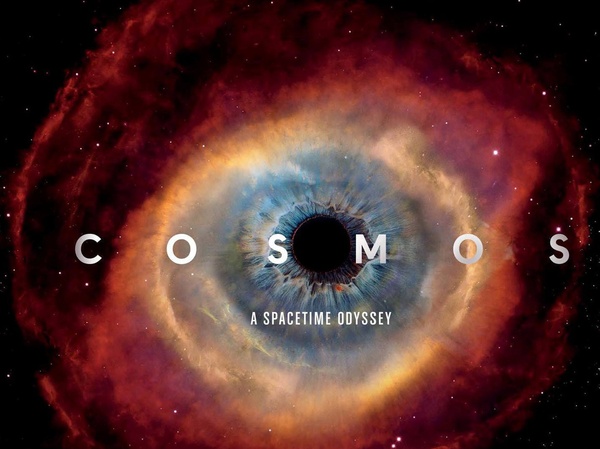
CosmosApparently some Christians are outraged about the reboot of “Cosmos” that premiered last night on Fox (and several Fox-affiliated networks).  Here are some actual tweets:

“Wow, and they (think) believing in God is insane? Takes more “faith” to believe what I just watched.”

“Apparently #cosmos can just lie on TV. The moon was actually created by God. As was life. So yeah we do know where life came from.”

and,

“Can’t stand all the #blasphemy this Cosmos show is spreading.”

I watched all sixty minutes last night, and I missed the blasphemy.  What I saw was an awesome explication of the first two verses of Psalm 119:

The heavens declare the glory of God;
the skies proclaim the work of his hands.
2 Day after day they pour forth speech;
night after night they display knowledge.

Or was it inspired by one of my favorite worship songs, “God of Wonders”?

Lord of all creation
of water earth and sky
The heavens are your Tabernacle
Glory to the Lord on high

God of wonders beyond our galaxy
You are Holy, Holy
The universe declares your Majesty
And you are holy holy

Probably not, because the folks behind “Cosmos” – Astrophysicist/Host Neil Degrasse Tyson, writer Anne Druyan (Carl Sagan’s widow), and Executive Producer Seth MacFarlane (yes, the “Family Guy” guy) – identify themselves as atheists or agnostics.  But that doesn’t mean “Cosmos” was anti-God.  For Christians, science does not have to separate us from God but can instead increase our sense of awe at God’s infinite creativity and power.  That’s what a show like “Cosmos” does for me, anyway.

tyson on spaceship of the imaginationWhen Tyson took off in his sleek “Spaceship of the Imagination” for a tour of the universe, I was swept up in the majesty of creation.  A combination of real images and blockbuster-quality CGI illustrated Tyson’s explanation of our planet’s address in broader and broader terms – first in the solar system, then in our galaxy, then in our cluster of galaxies and finally in the universe.  “God of wonders” indeed!

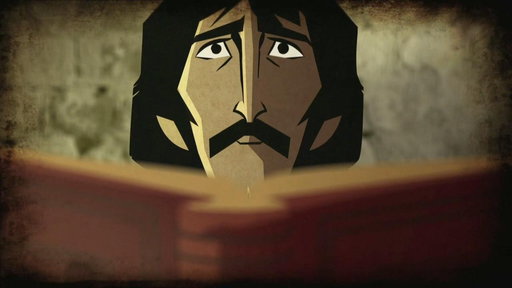
Perhaps the most potentially disturbing part of the program for Christians was a long animated section devoted to the story of Giordano Bruno, a Dominican Friar burned at the stake 400 years ago by the Roman Catholic Church.  “Cosmos” focused on Bruno because of his belief that the universe is infinite, and that the earth is not at the center of it. Tyson pointed out that not only did the Pope reject Bruno’s ideas, but also John Calvin and Martin Luther.

BUT, Bruno’s model of the universe was not what got him killed.  It was primarily because of other heresies – rejection of the Trinity, etc.- that he was put to death.  Tyson did mention that, but just in passing; it would have been easy to get the impression that Bruno was killed by the church solely because of his cosmology.

At least I think so.  I was somewhat distracted by the cartoon-Bruno’s resemblance to George Harrison.  Am I right?

Giordamo Bruno on Cosmos

If anything, “Cosmos” was anti-religion, or more exactly anti-religion-that-denies-science-in-the-name-of-God.  That’s not necessarily a bad thing, but it would have been nice if they had mentioned that the same Roman Catholic Church that was so resistant to science 400 years ago today officially says that there is no conflict between the Bible and evolution.  Not to mention we Lutherans have advanced beyond Martin Luther’s small-mindedness when it comes to a large universe.

In the last part of the “Cosmos” premier, Tyson described the 13 million years since the Big Bang as if all that time were just a year.  It was quite a humbling perspective – earth didn’t form until “September,” life did not exist until “October,” and all of recorded history happened in the last 14 seconds!

So this first episode of the new “Cosmos” began by showing how small the earth is compared to the great scale of the universe, and ended by illustrating what a tiny piece of time we humans have been writing things down.

Does that in any way challenge my belief in God?  Certainly not!  Science is concerned with the “how” not the “Who.”  Scientific investigation of the universe and its origins no more threaten my faith that God is the ultimate Creator than understanding fetal development shakes my belief that I (and everyone else) was “knitted together in my mother’s womb . . . fearfully and wonderfully made” by that same Creator (Psalm 139).

What would I say to those who feel threatened by something like “Cosmos?”  Maybe I’d say what Giordano Bruno shouted (at least in the “Cosmos” portrayal) at his church trial – “Your God is too small!”

And as Neil Degrasse Tyson said about Bruno, “The God he worshiped was infinite.  Why would his creation be anything less?”

I know Tyson is an agnostic, but “Amen” anyway!

—-

If you want to check out the first episode of “Cosmos,” it will be rebroadcast tonight on Nat Geo Wild.  It’s also available on Hulu.

Posted in Christian Living, Christianity, Faith and Science | Tagged , , , , | 8 Comments

“Ashes to Ashes” – An Ash Wednesday Homily

AshcrossSometimes I’m surprised anyone shows up for Ash Wednesday worship.

I mean, think of the primary message of this day, what I said to you when you received ashes and what you heard me recite over and over to others: “You are dust and to dust you shall return.”

In other words, “You’re going to die.”

But we’re here anyway.

Sometimes we talk about how Christianity is counter-cultural.  When we follow Christ we often walk against the prevailing direction of our culture.

There is no more counter-cultural occasion in the life of the church than Ash Wednesday.  In her opening monologue at last Sunday’s Academy Awards, Ellen Degeneres said, “I’m not saying movies are the most important thing in the world because we all know the most important thing in the world is youth.”  I don’t think that quip is just reflective of the Hollywood community.  Although we might not go to the multiple-plastic surgeries extent that was on display Sunday, we are part of a culture that can be obsessed with staying young and denying the reality of aging . . and especially the reality of death.

But on Ash Wednesday we gather to confront the reality that our bodies are perishable vessels that will not last forever . . . at least not in this fallen form.

But we’re here anyway

Another hallmark of our culture is affirmation.  We watch television personalities, or even pay big money to hear motivational speakers, who tell us how lovable and capable we are, who feed our desire to believe we have what it takes within us to be the best people we can be.  “Self-help” books are always featured prominently on the best seller list.

But on Ash Wednesday we gather to be reminded that the Bible is not shelved with the self-help books because its message is ultimately that we can’t help ourselves.  Today we confess that we are sinful to the core and sinners from the start – in the words of Psalm 51 we heard earlier,  “I was born guilty, a sinner when my mother conceived me.”

But we’re here anyway.

As we confess our sins and our sinfulness on Ash Wednesday, we don’t even get to hear that we are forgiven.  We begin almost every other service of the year with our words of corporate confession, followed immediately by the pronouncement of forgiveness in the pastor’s words of absolution.  But not today.  Today our confession was different than our usual Sunday morning rite; not only was it longer but its breadth and depth were far greater.  “We have not loved you . . . we have been unfaithful . . . we have not forgiven others .  . . we have been self-indulgent . . . we have been negligent in worship, “ and on and on.  Those words of contrition were allowed to linger, burning our consciences without the balm of absolution.

Pastor and author Nadia Bolz-Weber has written that the confession is the most honest part of the liturgy because it acknowledges who we really are.  But perhaps today’s confession is for you, as it is for me, painfully honest.

But we’re here anyway.

Thank God we are here.  Thank God we gather on this holy day.  Thank God we have this opportunity to be counter-cultural, to remember who we were – who we are – without God’s grace and forgiveness.  For it is only in acknowledging our desperate condition, our inability to save ourselves and our inability to even desire salvation without the prompting of the Holy Spirit . . . it is only in acknowledging  our powerlessness and our helplessness  that we can appreciate – that is much too weak a word – that we can rejoice in what God has done for us in Christ Jesus.

Perhaps “rejoice” is a strange word to hear in an Ash Wednesday homily.  But it is to rejoicing that our penitence ultimately leads.  The point is not – it cannot be – just to beat ourselves up with our failures and our failings.  The point is not – it cannot be – to wallow in the despair of our condition as fallen sinners.  Out of our honest humility comes sincere thankfulness and praise and, yes, rejoicing.

No wonder we’re here!

Ash Wednesday is just the beginning of a journey.  We set out on this Lenten journey together marked not just with ashes that remind us of our sin-stained mortality, but marked with those ashes in the shape of a cross.  That mark is a reminder of another cross smeared on our forehead; when you were baptized a pastor used oil-not-ash to make the cross on you and called you by name, saying, “Child of God, you have been sealed by the Holy Spirit and marked with the cross of Christ forever.”

The cross of Christ has overcome all of our sins and our sinfulness.  No matter how hard we try to mess ourselves up, the cross of Christ puts us right.  All of our failures and our regrets and our self-delusions and all the other ways we have let God and ourselves down, and all the ways we continue to fall short, all of that has lost its power over us.  All of that garbage was nailed to the cross, the cross to which we will journey during these 40 days.

No wonder we’re here!

Ash Wednesday is vital, a word which at its root means “life-giving.” To fully grasp the new life we receive through Christ, we must realize that we were truly dead in our sins.  We acknowledge that we are not just sinners but also hypocrites, that we are not the paragons of virtue we try to convince others – and ourselves – that we are.  As Martin Luther said, “God does not forgive fictitious sinners.”  It is only real, honest-to-goodness sinners who need the cross.

Sinners like us.

No wonder we’re here!

We begin our Lenten journey today with honest confession and a reminder of our mortality.  We will spend the next 40 days encouraged to take a good look at ourselves, and to call on the Holy Spirit to change us from the inside out because we can’t do it ourselves. 

And we do rejoice . . . we rejoice that God loves us anyway.  We rejoice that no matter who we are and what we have done, the cross is for us.

No wonder we’re here!

We focus on sin and death on Ash Wednesday.  But those crosses on our foreheads reminds us also that sin and death were defeated at Calvary.  Through the grace of God that victory was our victory; and because Christ lived and died and rose again, you and I can experience new life abundant in God’s blessing right now.  Lent is an opportunity to begin anew, to recapture the reality of God’s power and presence in our lives, and, empowered by the Holy Spirit, to live out our baptismal identity as children of God for the sake of the world.

What a blessing it is to begin this journey with you!

Sometimes I’m surprised anyone chooses to miss Ash Wednesday worship.

AMEN

(Based on a homily preached  at Christ Evangelical Lutheran Church of Millersville, March 5, 2014.)

Posted in Christianity, Church, Sermon | Tagged , , , , | Leave a comment

Israel, “Where God Is Not a Long Distance Call”?

OLYMPUS DIGITAL CAMERA

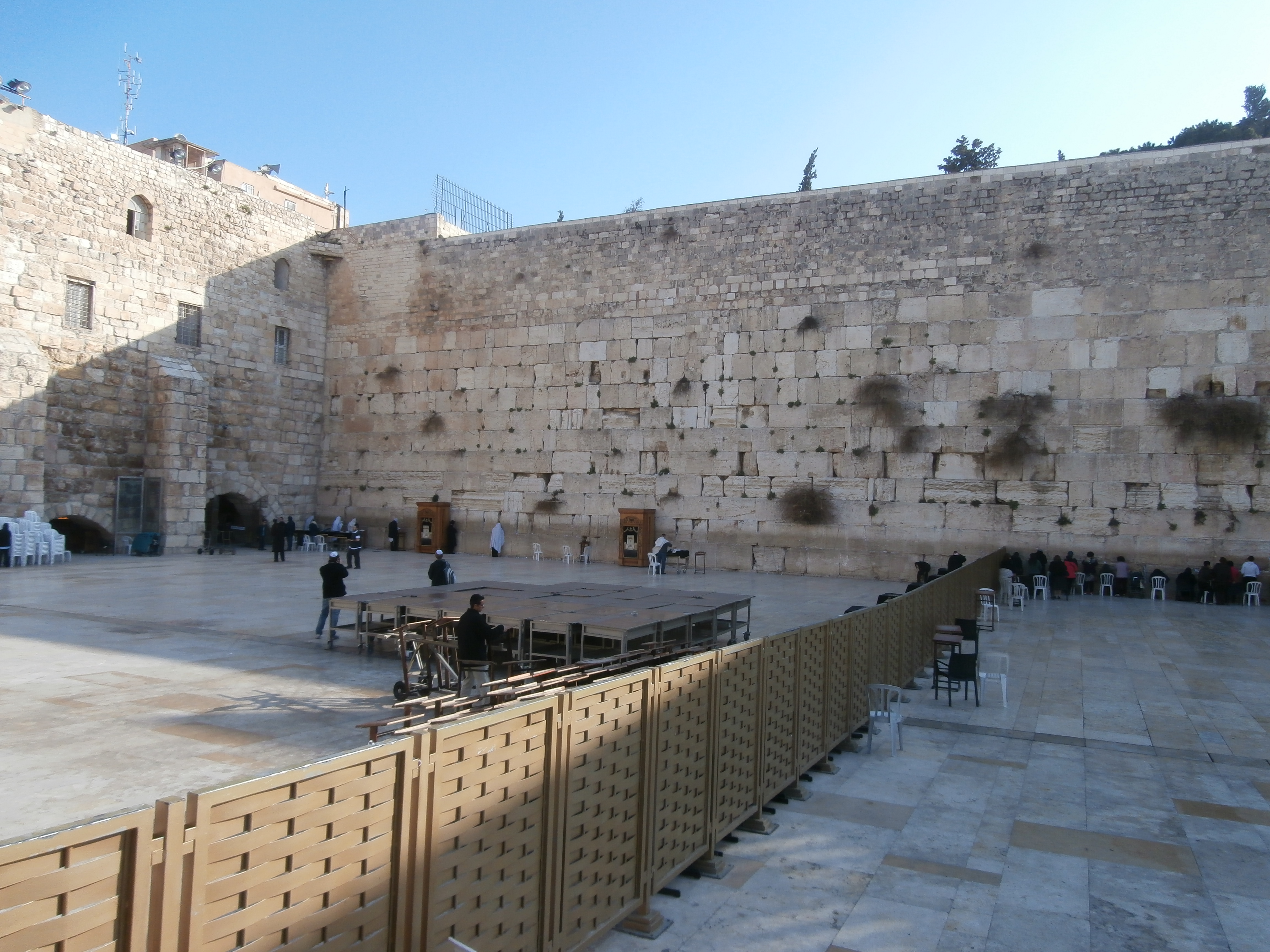
The Western Wall – note the division into two parts

(The fourth in a series of posts in which I reflect on my “group study pilgrimage” to Israel, February 10-20. Earlier posts here , here , and here.)  

The first time I made it to the Western Wall a torrential rainstorm had just begun.  It was still an amazing place to be, but somehow not very spiritual.  It was more like my first visit to the Coliseum in Rome or the Taj Mahal – there was the surreal feeling of being in a photograph somehow; I had seen those places so many times before in pictures and NOW HERE I WAS.  I had the same experience the first time I walked onto the Jeopardy set.  Yep, not very spiritual.

It didn’t help that I had misinterpreted the division of the wall . . . I thought one side was Jews and the other was Gentiles.  If I had paid more attention I would have avoided being shooed away by the woman attendant guarding what I too late realized was the women’s side of the men/women divide.

Cabinet containing the Torah at the Western Wall

Cabinet containing the Torah at the Western Wall

Things were a little different when I returned with our group of pilgrim pastors the next day.  Sunlight and blue skies reigned.  Worshipers (and tourists) lined the structure, some wrapped in white and blue prayer shawls, many bowing spasmodically as they prayed, some simply leaning into the wall, allowing it to support the weight of their bodies and the burden of their prayers.  At intervals along the wall stood wooden boxes containing the Torah; as our guide told us, the presence of Scripture transformed a location from a place of gathering to a place of prayer.

Prayers placed in the Western Wall

Prayers placed in the Western Wall

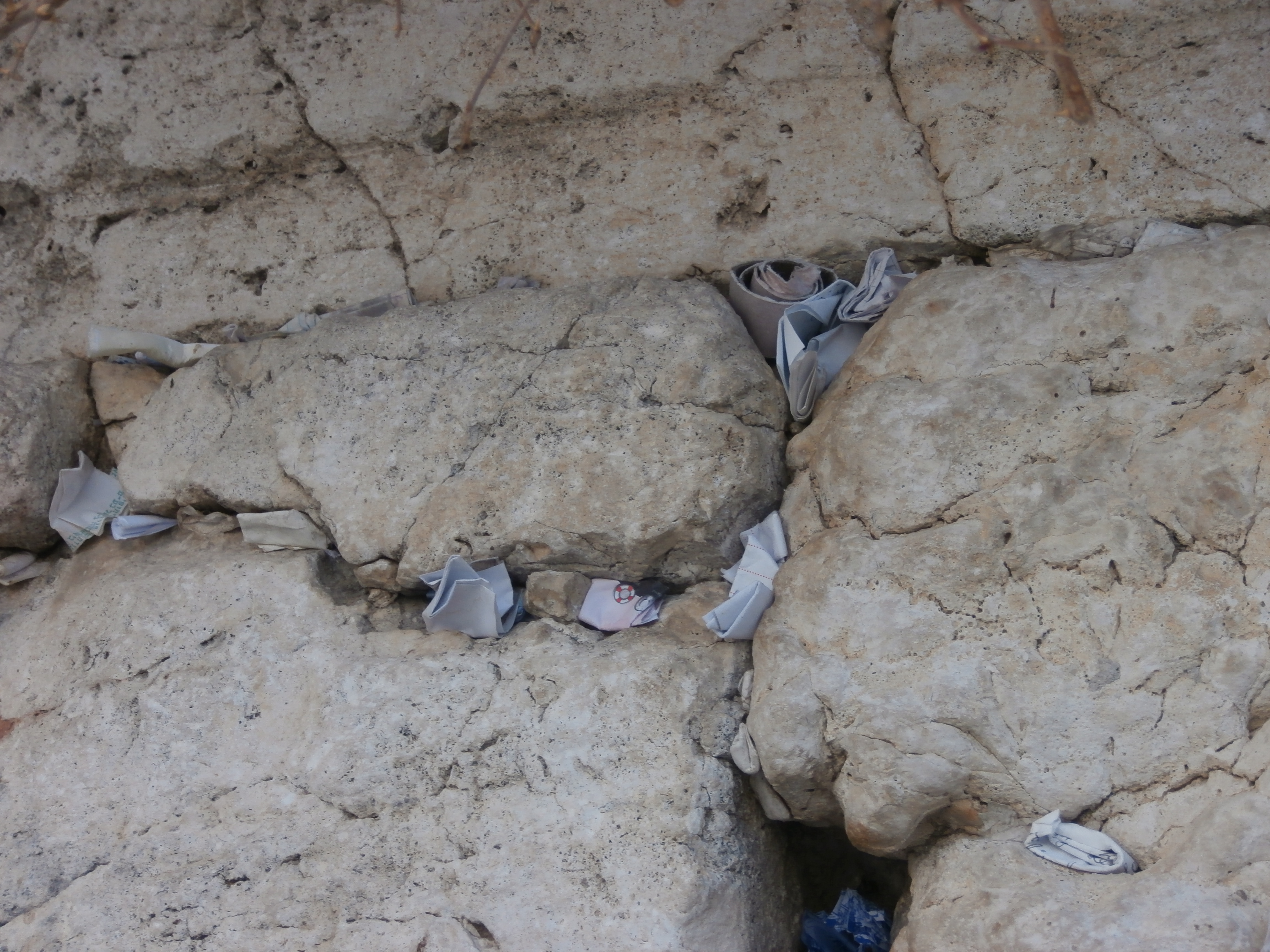
I approached the wall (on the correct side this time) and placed my hands on it.  I prayed.  I read the page in my pocket notebook where I had scrawled the names of folks back home I had promised remember in prayer on this trip.  Then I wrote a name on another page, ripped it out, and tossed it into one of the many gaps between stones.  There it joined thousands upon thousands of other printed pleas crammed into the crevices, where they would remain until one of the two times a year the notes are collected and buried on the Mount of Olives.

The Western Wall (also known as the Wailing Wall because dew covers the stones at night, “weeping” it is believed will stop when the Messiah returns) is a holy place for Jewish folks.  It is as close as they can get to the Holy of Holies in what used to be the Temple (destroyed in 70 AD).  Jerusalem is a city of many walls, but the only one that remains from the Second Temple of Jesus’ time is this retaining wall built by Herod the Great.

Although I prayed deeply as I stood there with my hands on the wall, my experience was clearly not as deeply felt as that of the Jewish folks around me.  For me as a Christian, the Holy of Holies is not a place, it is a person.  I don’t have to go to Jerusalem in order to approach the Holy of Holies, I only have to pray wherever I am.  He is not just with me, he lives in me.

Early in the journey, our guide jokingly said, “Welcome to Israel, the only place where God is not a long distance call.”

There is some heartfelt belief behind that quip, among Christians as well as Jews.  Some of us pastors on the pilgrimage were asked by our parishioners to pray for them, specifically in Israel.  Maybe the prayers would somehow mean more there?

The truth is that we were no “closer to God” in Israel – even in Jesus’ hometown of Nazareth, even at or on the Sea of Galilee upon which he walked, even in his birthplace at Bethlehem . . even at the Western Wall – than we are in our homes and our schools and our workplaces.  Or even in our churches.

Mount of Beatitudes, looking down to banana plants and to Sea of Galilee

Mount of Beatitudes, looking down to banana plants and to Sea of Galilee

But . . . the experience of God in Israel was different somehow.

One day we had a few moments on top of the Mount of the Beatitudes to spread out and meditate on what (may have – it’s not certain that is the “right” mount) happened there.  I sat on a rock overlooking the Sea of Galilee. Just below on the side of the hill banana trees grew where our guide had just said, “Imagine a crowd of people there instead of the trees.  You can see how everyone could have seen and heard Jesus as he shared the Beatitudes and the rest of the Sermon on the Mount.”  Bathed in brilliant sunlight, I read Matthew 5, 6, and 7 – the Sermon on the Mount.  They were the same words I had heard many times before, but they resonated differently.  They took on a spatiality.

That illustrated something else our guide had said – this experience would give us a “third dimension” to our understanding of the Bible.  And it did.

So although the Mount of the Beatitudes may not be the exact spot where Jesus delivered the Sermon on the Mount, it was definitely somewhere around there.  The Church of the Nativity may not be built on the precise location of Jesus’ birth in Bethlehem, but it is certainly, as another guide said, “in the neighborhood.”  Each of those places and the other sites we visited were opportunities to be steeped in the stories of the Bible, particularly the life and ministry of Jesus, in ways that engaged our hearts and our heads . . . and our bodies.

In other words, although we might not have been always (or even often) walking in the exact “footsteps of Jesus,” on our pilgrimage we gained new understandings of what those footsteps might have been like as well as what they meant.  One day we stood on a balcony with the Mount of Olives on one side and the Temple Mount on the other with the Kidron Valley in between.  Our guide traced Jesus’ route on Holy Week, down from the Mount of Olives and into the valley, past the huge cemetery that was there even then with each grave a reminder of his impending death, then up toward the temple.  Three dimensions indeed!

Rooster atop St. Peter Gallicantu

Rooster atop St. Peter Gallicantu

On that same day, we walked down, down, down into the dungeon below the Church of St. Peter Gallicantu (literally “rooster’s crow”).  We crowded into the dark, stone-walled space. Perhaps it was the dungeon beneath the High Priest’s palace where Jesus was held on Maundy Thursday.  Perhaps not.  But the precise location became irrelevant as one of our leaders began to read the unrelenting lament that is Psalm 88 from above us.  In part . . .

I am overwhelmed with troubles
    and my life draws near to death.
I am counted among those who go down to the pit;
    I am like one without strength.
I am set apart with the dead,
    like the slain who lie in the grave,
whom you remember no more,
    who are cut off from your care.

It was those immersive, multi-sensory experiences that made the pilgrimage so powerful.  Although I would not say my faith “grew” as a result, my faith was certainly enhanced; or maybe “expanded” is a better word.  Adding that “third dimension” will certainly benefit my devotional life.  And, even more important, it can’t help but augment my sharing of the Gospel with others.

Posted in Christianity, Israel | Tagged , , , | 6 Comments

The Unexpected Pastor’s Best Picture Countdown 2014 – Part Two

Matthew McConaughy priest DBC

Matthew McConaughy in Dallas Buyers Club

Here’s the conclusion of my ranking of the nine Best Picture nominees for Sunday’s Academy Awards.  Part One, with films #9-5, is HERE.

I had lots of trouble ranking these top four films.  Any of them would be a worthy Best Picture Winner . . .

4. Dallas Buyers Club

“Dallas Buyers Club” certainly wins the Jenny Craig award.  Matthew McGonaughey and Jared Leto both lost significant weight to play their AIDS-afflicted characters.  In his Golden Globes acceptance speech, Leto revealed that he’d also waxed his entire body – including his eyebrows – to play transgender Rayon.  The resulting performances were well worth the sacrifice; McConaughey and Leto should both take home Oscars Sunday night.  Although he is in the supporting role, Leto steals this film, playing with subtlety and depth a character that could have been a “look at me I’m acting here!” role.

The best scene in the film – so good I rewound and rewatched it twice when I saw it on pay per view – is when Rayon confronts her father at the bank.  It is a masterpiece of understated but powerful emotion.  When the father reacts to Rayon’s lifestyle by saying, “God help me,” and she responds, “He already has, I’ve got AIDS,” I thought about all the “Christians” who identify AIDS as a punishment from God and what that attitude must do to those who suffer.

Dallas Buyers Club is  difficult to watch because of its basis in the AIDS crisis but at the same time is a hoot because McConaghey’s Ron Woodroof is such an outrageous personality.  My only quibble with the film is Jennifer Garner’s stock “woman doctor dedicated to her work who only needs the right man to loosen her up” character and her formulaic relationship with Woodroof.

3. American Hustle

Like “Dallas Buyers Club,” “American Hustle” is a film where it’s a blast to just sit back and watch the amazing acting.  Except there’s more of it in “American Hustle.”  After David O. Russell’s “Silver Linings Playbook” last year became the first film since 1981 to be nominated in all four acting categories, he did it again this year, directing the cast of “American Hustle” to the same feat.  As Phil Jackson was to the NBA, David O. Russell is to film.

“American Hustle” is a lot of fun.  The plot is convoluted, but the 80’s fashions and hairstyles and music carried me along for the wild ride of cons and counter-cons.  It’s like “The Sting” updated from Ragtime to Disco.  “American Hustle” is not higher on this list because while I enjoyed the ride and the characters, I never had any real emotional investment in them or in what happened.

Or didn’t happen.  The brilliant disclaimer at the beginning of “American Hustle”says, “Some of this actually happened.”

2. Philomena

Of the nine films nominated for Best Picture, “Philomena” is my favorite.  Like a Best Picture should, it affected me on many levels.  I left the theater angrier than I had been after a movie in quite a while, but at the same time I was inspired by Philomena’s story and resilience.

“Philomena” deals with vital spiritual themes without preaching or sanctimony.  It acknowledges that evil can sometimes be rooted in religious institutions, but finally “Philomena” the film and the character demonstrate the far greater power of unexpected – and undeserved – forgiveness (i.e. grace).

But “Philomena” also made me laugh, especially at the odd couple relationship between Judy Dench’s always hopeful Philomena Lee and Steve Coogan’s jaded journalist.  Dench  is delightful in the lead role.  If not for Cate Blanchett’s astounding performance in “Blue Jasmine,” Dench would be my choice for the Best Actress prize.

For more about “Philomena” and its themes, you can read the post  I wrote after seeing it, “‘Philomena:’ A Film Review and a Reflection on What it Means to Be a Christian.”

1. 12 Years a Slave

To say I was not excited about seeing “12 Years a Slave” is an understatement.  Slavery is bad, I get that.  I watched every episode of “Roots.”  I was appropriately outraged at “Django Unchained.”  I snickered knowingly at Amy Pohler’s Golden Globes joke about “12 Years,” “I can honestly say after seeing that film I will never look at slavery the same way again.”

I knew “12 Years a Slave” would be difficult to watch.  I knew that as a white man with southern roots, I would feel not just anger but guilt.  Did I really need to subject myself to that?

Yes.

It was indeed difficult to watch.  I experienced not just anger and guilt but a multiplicity of other inconvenient emotions, just as I had expected.  But what I didn’t expect was the sheer beauty of the film.  It wasn’t just the light-filled images of sunlight streaming through Spanish moss or gorgeous close-ups of insects alighting on blades of grass.  Virtually every frame of the film, even those depicting the most hideous outbursts of violence, was shot with an aesthetic sensibility that made “12 Years a Slave” not just an “important” movie but a transcendent experience.

Like “Philomena,” “12 Years a Slave” demonstrates evil’s perversion of what is good.  As a Christian and pastor, I seethed at the scenes where slave-masters subjected their “property” to Scripture readings.  How, I wondered, did any of those living in such bondage at the hands of “Christians” end up believing in Jesus Christ as their savior?  This is certainly a mystery, and a testimony to the power of the Gospel – the Gospel of freedom and hope.

In fact it is hope that somehow pervades the entirety of “12 Years a Slave,” the Best Picture of the last year.

Bonus: My Favorite Film of the Last Year

It’s not nominated for anything and it probably shouldn’t be because “favorite” is different than “best,” but The Way Way Back” was by far my favorite movie last year.  Do yourself a favor and watch this woefully under-known movie.  The last scene is absolutely the best closing of any movie since “The Graduate.”  You can thank me later.

As always, I hope you’ll share your picks – especially your disagreements with mine – in the comments!

Posted in Arts and Culture, Christian Living, Movies | Tagged , , , , , | 3 Comments

The Unexpected Pastor’s Best Picture Countdown 2014, Part One

Pastor OscarWith the Academy Awards scheduled for Sunday evening, today we interrupt the series of posts about my Israel trip  for Part One of my annual Best Picture Countdown. Part Two will be posted tomorrow. (The Israel posts so far are HEREHERE, and HERE and will continue Monday.) 

I’ve watched (sometimes endured) all nine nominees so you don’t have to – just read these mini-reviews and you’ll be ready to enjoy as the always entertaining Ellen Degeneres hosts Hollywood’s most prestigious awards show.

As in the past, the films are not ranked by prediction of who will win, nor by which ones I “liked the best,” but by my opinion of whether they should take home the Best Picture Oscar on Sunday . . .

9. Her

I stand by the assessment of “Her” I posted on Facebook after I sat through it: “Let’s see, how to sum up my feelings about this film . . . One of the characters makes a documentary film that is basically footage of her mother sleeping.  I would have rather seen that movie.”

To be honest, I did not see all of “Her.”  I napped periodically, confident that I missed nothing important because nothing interesting happened when I was awake.  Except perhaps for Joaquin Phoenix’s high-waisted pants; it was strange that a movie set in the future would dress its main character in Fred Mertz fashion.

I expected to love this movie. It sounded similar to the excellent “Eternal Sunshine of the Spotless Mind,” also directed by Spike Jonze.  That film and the awesome “Adaptation” demonstrate Jonze to be a director who can be original and daring.  “Her” is neither.  It is safe and, most damning of all, boring.  As Richard Brody wrote in The New Yorker, “It plays like a full-length kitten video.”

8. The Wolf of Wall Street

Ten years ago or so in a seminary Ethics class, I wrote a paper called, “Why Christians Should See R-Rated Movies.” I argued that films with “questionable” material are often valuable because, like other forms of art, they are a reflection of the culture in which they are made.  Movies can help us understand and therefore minister more effectively.

After three hours with “The Wolf of Wall Street,” I’m ready to take all of that back.

Not really, but “Wolf” certainly does not help my argument.  The first hour or so is compelling, chronicling how Leonardo DiCaprio’s character was sucked into the money-making mania that was Wall Street in the late 80’s and early 90’s (partly by Matthew McConaughey, whose too-brief appearance as an unhinged but ultra-successful broker is the best thing in the film).  But as DiCaprio ascends to the heights of financial success and descends into the depths of debauchery, a film that could have been a powerful indictment of self-indulgence becomes an over-the-top participation in that same depravity.

Somewhere in the three hours of non-stop profanity, sex, nudity, and Quaaludes is a profound illustration of the fallen, sinful condition of the world we live in.  Chopping off an hour of sensationalism may have resulted in a film that makes an astute statement about that depravity rather than giving into it.  Martin Scorsese has made some great films; this is not one of them.

7. Captain Phillips

Tom Hanks deserved a Best Actor nomination for this film, especially for his brave, raw improvisation in the last 10 minutes.  Other than that, “Captain Phillips” is a fairly standard, if well-done, suspense movie so it does not rank higher on my list. “Captain Phillips,” like several other reality-based nominees, has been criticized for taking liberties with “the truth.” I don’t think that is relevant to whether a film is “good” or award-worthy; unless a movie purports to be a documentary, its creates its own truth and is not beholden to re-enact events “as they happened.”  Much of real life is boring.  Movies, even serious films, are not supposed to be boring. “Captain Phillips” definitely is not boring, but neither is it a “Best Picture.”

6. Nebraska

I really loved “Nebraska.”  It’s the kind of quirky film that drew me into its world and made me care about the characters who live there, even though they are deeply flawed and not all that lovable.  The decision to shoot “Nebraska” in black and white was genius; I cannot imagine it in color.  The mood would have been completely disrupted.  “Nebraska” was also probably the funniest movie I saw in 2013 – I still laugh thinking about the scene in the cemetery (which likely sealed Jane Squibb’s well-deserved Best Supporting Actress Nomination).  I would not be disappointed if “Nebraska” won, but it is not higher on my list because it just doesn’t seem to be a “Best Picture” kind of film.

5. Gravity

“Gravity” is  a rip-roaring good time.  It is a marvel not just of special effects but of pacing and getting the most out of actors who are doing their thing in the midst of what could be overbearing technology.  Plus, it’s directed by Alfonso Cuarón, who directed “Children of Men,” one of my top-ten films (although if I ever did write out my “top ten,” there would probably be at least 20 films on the list).  Gravity could very well win Sunday – it made lots of people lots of money and revitalized 3-D as a Hollywood money-printing machine.  What separates it from the films further up on the list is my Ultimate Movie Test – Did I think about its themes in the days after I saw it?  The movie was lots of fun in the theater.  But it was like the popcorn I had there – really tasty while I was eating it but the experience really ended after the box was empty.

Tomorrow, the Top Four . . . The remaining nominees alphabetically are “12 Years a Slave,” “American Hustle,” “Dallas Buyers Club,” and “Philomena.”  Who will be #1?

I hope you’ll share your picks in the comments, even if (especially if!) they are different than mine.

Posted in Arts and Culture, Christian Living, Movies | Tagged , , , , , | 1 Comment

Lutherans and Baptists and Pentecostals, Oh My! (Another Israel Trip Post)

Holy Land Pilgrims at Caesaria Maritima's Roman Amphiteatre

Holy Land Pilgrims at Caesaria Maritima’s Roman Amphitheatre (Photo by Duane Kemerley)

(The third in a series of posts in which I reflect on my “group study pilgrimage” to Israel, February 10-20. Earlier posts here  and here .)  

“A Lutheran pastor, a Southern Baptist preacher, and a Methodist minister walk into a bar . . . “

Sometimes my journey to Israel was like being part of an old joke come to life.   Yes, there was a priest (and although not part of our group, I’m sure there were plenty of rabbis around to round out the cast).

Dublin Irish Pub, Jerusalem

Dublin Irish Pub, Jerusalem

Some of us did actually “walk into a bar” together at least once.  One evening an ecumenical group of us hung out for a while at Dublin, an Irish Pub in Jerusalem.  Guinness flowed (for those whose denominations didn’t frown on drinking alcohol) and decidedly non-Irish bass-heavy music pounded as we shared our ministry experiences and call stories.

That kind of  interdenominational sharing happened not just at the pub but throughout the pilgrimage.  And it was perhaps the most unexpected blessing of the experience.

It is easy for pastors to become entrenched in our denominational domains.  Even when it comes to worshiping an all-encompassing God, our human tendency is to divide and define “those people” by how they are not “like us.”

This is evident even at the two most holy sites in Christendom.  You would think (hope!) that differences could be set aside at the purported places where Jesus was born (Church of the Nativity in Bethlehem) and was crucified/buried (Church of the Holy Sepulchre in Jerusalem).  But both of these massive shrines are denominationally divided sort of like the old sitcom plot where a feuding husband and wife would draw an imaginary line through their apartment – “You can’t use the bathroom, that’s on my side!”  At least at the Church of the Nativity the factions are united when each sends a representative for 15 minutes of cleaning together.

Now that’s ecumenism at its finest! (Make sure you read that with an appropriate tinge of sarcasm.)

Pilgrims at Chuch of the Nativity

Pilgrims at Church of the Nativity (I’m in the front sporting a Washington Nationals ballcap)

The Israel pilgrimage in which I just participated was, in fact, ecumenism at its finest (no sarcasm).  Thirty-seven pastors of varied denominations, ages, races, regions, backgrounds, and genders traveled together without dividing the bus into denominational enclaves.  We became part of each other’s experience of Israel . . . in a good way.  Folks from denominations that don’t ordain women accepted (or seemed to) women pastors as colleagues and fellow-pilgrims.

For me, the pastoral sharing was a highlight of the journey.  Several nights I gathered with pastors from denominations as different as Pentecostal, Presbyterian, Methodist, at least two varieties of Baptists, and so on, to talk about topics that could be theologically divisive.  But we listened to each other rather than trying to convince each other of our theological correctness as we discussed baptism and communion and the forms our worship services take.  I learned a great from my brothers and sisters in ministry, especially when they shared the stories of their own faith journeys.

I am pretty much immersed in Lutheran theology most of the time.  There are some ecumenical ministries in which I participate, but those are focused more on getting things done rather than really bridging denominational gaps.  There just isn’t time in most of our ministry contexts to sit around and chat with clergy about our varied beliefs as I had the opportunity to do in Israel.

I was surprised to make friends – friendships that I hope will endure beyond the trip – regardless of denominational or regional differences.  Somehow “walking in the footsteps of Jesus” was even more powerful being reminded that although we differ in the details, we all meet at the cross and at the empty tomb.  On this trip, we did meet there, not just theologically but physically.

On our last day in Israel, we had  short service of communion at the Garden Tomb site in Jerusalem.  In the brilliant sunshine just yards away from a tomb where Jesus’ body might have been laid, we sang together – as we had often done during the pilgrimage – listened to Scripture, and then shared bread and wine.  Communion – the union of the community of saints – happened.

In the life to come, there aren’t going to be denominational sections.  Those human constructs will be as useless as national borders and definitions of ethnicity.  We’ll be one body praising and worshiping together for eternity.

I am thankful to have experienced a glimpse of that eternity with my brother and sister pilgrims in Israel.

I need to express my profound gratitude to the Knights Templar who made this pilgrimage possible.  It is properly known as the Knights Templar Holy Land Pilgrimage, and it allows pastors who have never been  to travel to Israel all expenses paid.  (And when they say all, they mean it – transportation from home to New York City, airfare to Israel, accommodations, (excellent) meals, admission fees, and even tips!)

About a year ago a member of my congregation approached me and asked if I had ever been to Israel.  I said that I had not but really wanted to go.  He told me about this opportunity and asked if he could nominate me.  I said sure, as long as I didn’t have to join anything (I’m really not a joiner).  The rest, as they say, is history.

I have been tremendously blessed by this experience that would not have been possible without the generosity and dedication of the Knights Templar organization.

Thank you.

Posted in Christianity, Israel | Tagged , , , , | 6 Comments

“Goose Bump Experiences” In the Holy Land

The Sea of Galilee from the Mount of the Beatitudes

The Sea of Galilee from the Mount of the Beatitudes

(The second in a series of posts in which I reflect on my “group study pilgrimage” to Israel, February 10-20. First post here.)

I saw Lily Tomlin’s one-woman show, “The Search for Signs of Intelligent Life in the Universe,” way back in the mid-80’s.  In the play, aliens trying to understand humanity are intrigued by what one of Lily’s many characters calls “Goose Bump Experiences,” those mysterious moments of transcendence that cause human spines to tingle and that manifest themselves physically in that fleeting phenomenon of the flesh.

Since seeing the show, I’ve been on the lookout for Goose Bump Experiences. But they don’t manifest on command; I have never been able to wake up in the morning and say, “I’m going to have a ‘Goose Bump Experience’ today,” and then make it happen.  Like love and, for me at least, faith, Goose Bump Experiences are always unexpected.

In Israel, I saw many amazing, meaningful things.  But the Goose Bump Experiences were indeed always a surprise.  Here are two . . .

Goose Bump Experience Number One – Here I Am

We spent our second night in Israel at Ginosaur, on the shore of the Sea of Galilee.  After dinner, I exited the dining room and followed a sign “to the Sea.”  I sauntered down that paved path alone – my inner introvert appreciated some solitary time in the midst of traveling with 36 other pastors. I was in no hurry and it was still less than a five minute walk.  I had no deep purpose for my stroll; the crisp evening air and the charge of being somewhere I’d never been were enough to get me moving.  The huge buffet supper I’d just wolfed down didn’t hurt, either.

But as I wandered down that path, my mind wandered and I found myself remembering.  The Sea of Galilee.  I had first heard of it in Sunday School years and years before – Jesus walking on water, Jesus calming the storm.  A miraculous catch of fish!  Cutout characters on a flannel board.  Then, years when those stories meant nothing, years when I did not believe anything that could not be physically explained – walking on water, how ridiculous! – could happen.  Now, here I was walking to that very sea.

I never expected to be here.  Not just geographically, not just physically at the Sea of Galilee, but here in my journey of faith.  Here as someone who believed in the miracles and the teaching and the compassion that happened on and around this body of water.  I never expected to trust my life, to pin my very being, to the One who had walked here 2000 years before.

Who had walked here.

Yes, a definite Goose Bump Experience.

Goose Bump Experience Number Two – Watching the Audience
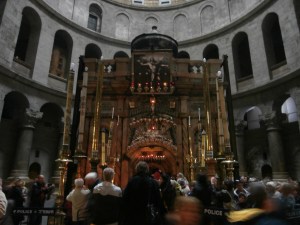
Edicule in The Church of the Holy Sepulchre

Edicule in The Church of the Holy Sepulchre

In “The Search for Signs of Intelligent Life of the Universe,” those aliens trying to understand humans finally manage their own Goose Bump Experience.  It happens at a play.  The aliens are overwhelmed not just by the emotion of the but of the communal nature of the feelings.  It turns out that the goose bumps came from watching the audience; no one had told them to pay attention to the play . . .

There were times during the trip to Israel when the sarcastic cynic that dwells just below my surface poked his jaded head up for air.  Standing in line in the Church of the Holy Sepulchre was one such time.

The queue was to get into the Edicule (or Aedicule), the “little house” which housed the Tomb of Christ. Well, maybe.  There was a competing spot for the tomb in another part of Jerusalem we’d visit later in the tour.  But this was the place with the big – and I mean huge – church.

And speaking of competition, this humongous church isn’t big enough for the squabbling denominations that call it holy.  Greek Orthodox, Armenian, Coptic, and so on all have staked out their territories.  The Ethiopian Christians have a chapel on the roof because they weren’t allowed inside.  The Coptic Church  attached their own little structure to the main Edicule (a little house on the little house?)  I appreciate denominational diversity, but rival churches in a place purported to commemorate the place where Jesus was crucified (upstairs and to the right) and was buried (downstairs) does not strike me as very “holy.”  And certainly contributed to my deteriorating attitude in the line.

Just being in a line did not help. I hate lines.  I will change lanes three or more times at a grocery store if I sense one or another is moving a little faster.  But there was only one line here, a mob of humanity waiting to get into the two little rooms of the Edicule where the public is allowed; one contains what is left of the stone rolled in front of the tomb, and one is a memorial to where the tomb itself was located.  Why a “little house” to impede traffic at all, I wondered.  Surely there was a better, more efficient way to move people through.

Had they thought of getting a consult from Disney World?

Yes, those were the unholy thoughts that increasingly filled my mind in that hour and a half line.  It was kind of cool to hear folks being shushed by Priests of All Denominations, though (the Copts were especially harsh).

I admit my recollection of reading during the wait was less Mark the Evangelist and more Mark Twain who, in Innocents Abroad (one of my favorite books), wrote about this place:

When one stands where the Saviour was crucified, he finds it all he can do to keep it strictly before his mind that Christ was not crucified in a Catholic Church.   He must remind himself every now and then that the great event transpired in the open air, and not in a gloomy, candle-lighted cell in a little corner of a vast church, up-stairs – a small cell all bejeweled with flashy ornamentation, in execrable taste. . .

I actually think the ornamentation is quite beautiful, but when my place in line finally reaches the front of the Edicule, I am more intrigued by the 15 or 20 foot-high candles (How do they light those things and put them out?  Whose job is that?) than by the prospect of my imminent entry into the place where Christ may have been entombed.

But then . . .

I am almost to the door that will allow me entry into the Edicule.  Finally.  But right there is a special entrance into the line for dignitaries and the infirm.  A group of three is allowed to join the queue right in front of me.  There are two women who appear to be about my age and another woman who could be as ancient as this place.  She is bent over as she walks.  “Shuffles” is a better description of her movement as she leans on the two younger women for support.  I can’t help but ask, “How old?”

“Eighty-seven.  Now she can go happy.”

The accent is American.  My first thought is, “How did they ever get her onto the plane and through the airports to get her here?  That’s some kind of love in action right there.”

What comes next aren’t thoughts at all.  I step into the first chamber behind this woman and (I find out later) her granddaughters.  She places a hand on the glass case that holds the stone that sealed the tomb, not for support but in reverence.  Her eyes close and she is still.  Then, leaning on her granddaughters, she steps into the main chamber.  It is not big enough for me to join them but I watch through the door.  She lays her arms and whole torso on the rock shelf there.  Her lips move in silent prayer.  She weeps.  So do her granddaughters.

So do I.

Tears and goosebumps.

Watching the audience.

Does it really matter if this is the exact spot of Jesus’ tomb?

What really matters is that the tomb was empty.  It still is.

I think that’s what that aged woman knew.  That is the thing of which I needed to be reminded.

That trio could have gotten in front of any of the thousands of people in that line.  They got in front of me.  What a gift.  What grace.

Thanks be to God!

(I should note that “The Search for Intelligent Signs of Life in the Universe” was written by Jane Wagner.)

Posted in Christianity, Israel, Uncategorized | Tagged , , , , , | 9 Comments