The Saddest Place on Earth

Uziel Spiegel

Uziel Spiegel

(This is the first in a series of posts in which I will reflect on my “group study pilgrimage” to Israel, February 10-20.  We begin at the end of the journey . . .)

“It will be the most incredible monument you have ever seen.”

That’s what Ezra, our guide, said as we stood outside the Children’s Memorial at Yad Vashem, Israel’s Memorial to the Holocaust in Jerusalem.

I have to admit I was a little skeptical.  Ezra had been a reliable source of information for more than a week as he  led our ecumenical group of 37 pastors around the Holy Land.  He had been a font of facts and dates and compelling stories covering thousands of years of history.  We had seen so much here in Israel – and in other places in our lives  . . . this would be the most incredible monument?

Ezra explained some of the history of the Children’s Memorial.  It was funded by Abe and Edita Spiegel whose 2 and a half year old son, Uziel, was murdered at Auschwitz.

Children's Memorial Exterior

Children’s Memorial Exterior

The exterior of the memorial is intentionally unfinished.  Stone and steel columns that do not complete their reach symbolize lives pitilessly shortened.

Once inside the structure, you pass the stone relief image of Uziel Spiegel.  His plump cheeks and mellow smile give no clue to the horror awaiting him and 1.5 million more children.

One and a half million!  How can you ever wrap your head around such a number?  Of the six million who died in the holocaust, an estimated quarter of them were children.

This is not a matter for the head.  Statistics and maps and chains-of-command are useful for comprehending the mechanics of the butchery, but they can become a buffer for the heart.

There are no such heart-shields here.

The path descends into the core of the memorial.  It is underground.  The way narrows on each side.  Your experience is of cattle being herded into the slaughterhouse.  Or, more incomprehensible than cattle . . .

A few more steps, and you are on level ground.  Underground.  Before you is a glass case where black and white images float, suspended before you.  Each is an old photograph of a child.  They are of varied ages, genders, and, complexions.  But, you realize, they had something in common.  Each one was a Jew. And something else . . . each one was murdered.

Then the path turns and you are in darkness.  But in the darkness are lights.  Thousands of them . . . no, there must be hundreds of thousands, maybe more than a million.  The walls and ceiling and even the floor are mirrors.  There are one or just a few source candles in the center of the empty space.  It is impossible to tell.  But brilliant points of reflected light float and flicker in the darkness.  Each one represents a child.

And then you become aware of the voice.  A name is read.  Then an age.  Then a place – a hometown.  Then another.  On and on the names are read.  Children are remembered.

You may hear in the background the sound of a male voice choir droning a sustained minor chord.  But this may be a tonal enhancement by my memory, an aural expression of the gloom and sorrow pervading the place.

For if you are like me, as you walk through this place, clutching the guide rail in the darkness, grief leaches from your heart and every other organ. You are burdened by leaden despair.

One and a half million is no longer a number.  It is heartbreak.

Finally you emerge – or perhaps escape – from this space up into the light.  There is a terrace there overlooking the mountains of Judea and down to the city of Jerusalem.  It is a beautiful view.  But one I had trouble taking in until I wiped the tears from my eyes.

Just beyond and beneath the terrace is a sidewalk.  As I stood there doing my best to regain my composure, a line of young people began to file by.  I assume they were a class on a field trip.  They looked to be 15 or 16 years old. As young people do on field trips, even to a holocaust museum, some were acting quite silly.  One young lady was riding piggyback on a young man’s back.

Thank God for them.  And God be with them.

I’ve got nothing profound with which to end this post.  Nothing worthy of the place or of what it represents or evokes.

The best I can do is this . . . The Children’s Memorial at Yad Vashem is an important place.  It is vital to remember.  But I am not sure what to do.

Perhaps it is the remembering that is the point.

Posted in Israel | Tagged , , , , | 9 Comments

Stop Talkin’ ’bout My Sister!

Rainbow Cross by Karen Simpson

Rainbow Cross by Karen Simpson

It’s time for me to be the  big brother I never really was when we were growing up.  I was too involved in my own life.  But it’s time for me to stand up for my sister.

Not that my sister needs me to defend or speak up for her.  She’s my “little sister” only because she is 2 years younger than me.  She is in better shape materially and physically than I am.  I am a very proud older brother.

But I’ve been silent while people have said all sorts of mean and hurtful things about my sister. Most of those mean and hurtful things have been said by Christians.

They say “hate the sin and love the sinner.”  But then they go and say ignorant things like those listed below.  All of them are untrue, and none of them are loving.  And when they are said, they slander real people like my sister.

So stop talking about my sister.  Stop saying stuff like . . .

Gay folks choose to be “that way”

I’ve never talked about this with my sister.  I figure it would either be insulting or incomprehensible to ask her,” So, when did you decide to be gay?”

I mean, if you asked me “When did you decide to be straight,”  I would have no answer for you.  It’s a setup.  I never “decided” to be straight, it’s how I am.

I cannot imagine deciding to be attracted to men instead of women.

I would imagine the same is true for my sister. So stop insinuating that she could have. 

Stop calling her a liar – “You’re not really gay, you just decided to pretend you are.”

Insisting my sister chose to be gay only flaunts your ignorance.  So stop!

Gay folks are evil

We are all sinners – we’ve all fallen short of the glory of God (Romans 3:23 ).  We can disagree about whether homosexual behavior is sinful or not, but if you want to believe it is, why be so fixated on it when there are so many other great sins to dwell upon?

Gossip hurts many more people than homosexuality ever has.  Let’s not allow gossips to get married, or to adopt children, or be schoolteachers.

Actually, that’s not a bad idea . . .

Look, my sister is a sinner (like me and you) not because she is gay, but because she is human.

Stop pretending homosexuality is some kind of super sin and that gay folks are super sinners.  You’re talking about my sister.

Gay folks are “that way” because of bad parenting

Now you’re talking about my mom and dad.  When you make statements like that, do you ever consider that you’re talking about real people, not rhetorical points? 

Our mom was an awesome mom (you can sing that to the tune of “Awesome God” if you like), especially when we were little.  There was no “role reversal” in our home – she cooked, cleaned, and did all the stereotypical mom things while staying home until we were in elementary school.  She never left the house without her makeup. My dad brought home the bacon and was in charge (or at least thought he was; you know how that goes).  Both mom and dad made their kids their number one priority.

My parents certainly weren’t perfect, but they weren’t the screwed up failures you accuse them of being when you say my sister’s gay because of my mom and dad – and that is what you’re saying when you make blanket statements about the parents of gay folks.

So just stop.  Stop talking about my parents.

Gay couples don’t last

 I guess gay folks can’t commit like us heterosexuals, huh.  Us heterosexuals with our 50% divorce rate and our multiple marriages.  Yay us!  We’re so smug in our superiority.

My sister has been with my sister-in-law for 21 years.  That’s four years longer than I’ve been married.  I’m very competitive and that’s tough for me to admit.

So here you’re not just talking about my sister.  You’re talking about, as my kids refer to them when they don’t call them their aunts, my sisters. 

Stop it. You don’t know what (or who) you’re talking about.  Or who you’re hurting when you say these things.

 Gay folks are pedophiles

 Now I’m pissed.  You’re talking about my sister – and my sister-in-law – who I would trust with my kids before I would anyone else in the world.  And I have.

Statistically, there are way more straight pedophiles than gay predators.  That sentence really doesn’t make sense, because pedophilia is a whole different class of sexual attraction – whether it involves attraction to minors of the same sex or different sex, it is neither “gay” nor “straight.” 

Acting on such an attraction is wrong because it is exploitation of power imbalance – a child cannot consent, so it is always involuntary.

Homosexuality is not a gateway drug to sexual perversion.  Pedophilia, even though it seems to be brought up over and over in these sorts of conversation, has nothing to do with homosexuality.

It has nothing to do with my sister, so shut up about it.

Now that we’ve taken care of that, let’s go to a related topic . . . 

Gay folks shouldn’t be parents because they harm kids

My sister would be an awesome parent.  I’m willing to back that up with the most precious gifts I’ve ever received – my children.  According to my wife and my wills if something happens to both of us (i.e. we die at the same time) my sister and sister-in-law will be the parents of my children.  They love them like nobody else does.  We all need somebody in our lives who loves us unconditionally, and for our children those people are their aunts.

It’s just a shame they live in a state where they could never (unless the law is changed) legally become their parents.  “The ideal is for a child to have a mother and a father.”  Yeah, we could have them raised by some of their abusive or addicted relatives . . . hey, it’s a mom and a dad, so it must be okay.  This is not an “ideal” world, nor is that an ideal solution.

We need to stop letting our prejudice get in the way of love.

Studies have shown that children being raised by same-sex parents are no more likely to get into legal trouble or to use mind altering substances. Being gay is not something you catch or that you learn. 

I don’t have any fear that my daughter would “turn” if something happened to my wife and I.  I don’t think she is but if she’s gay she’s gay. 

I feel the same way I did when someone asked me what I would think if she dated an African-American (although the questioner did not say “African-American”) or married “one.”  I said as long as he loved her and treated her with respect and agape, it would be great.  I’d feel the same way about a woman.

Gay folks can’t be Christians

So according to you my sister’s going to hell.  That’s about the worst thing you can say about my sister.

Even if homosexual behavior is a sin, where in the Bible does it say that it is unforgivable?  Where does it say that the blood of Jesus doesn’t cover it?

I know, I know.  Your argument is that if it is not repented it’s not forgiven.  Is that true of all sins, or just homosexuality?  If it’s true for all sins, heaven’s going to be pretty empty because the second most popular activity in most churches (behind potlucks) is gossip.  All those unrepentant gossips, are they going to hell?  And folks who are greedy or selfish and don’t even realize it because they’ve rationalized their avarice, they’re on the down elevator as well?

I’m all for repentance.  But repentance doesn’t mean being perfect in either behavior or understanding, it means doing our best, guided by the holy spirit, to turn toward God.  Some things we’re going to get right . . . and others we’re going to continually mess up.  Thank God we’re saved by grace through faith!

My sister goes to church a lot more faithfully than other straight Christians I know – in fact more faithfully than most folks in my church.  She never, as far as I know, professed to be an atheist (like her brother – me).

So really, who’s saved and who’s not isn’t up to you or me.  It’s up to God.

Stop talking about my sister like you’re God.

I have prayed, studied, and otherwise struggled with the issues around Christianity and homosexuality.  I still do.  We can, and should, continue to talk about these issues.  But we must never forget that we are talking about real people – like my sister.  Empowered by the Holy Spirit and directed by Jesus’ command to love others as we love ourselves, we can have that conversation without employing unfounded – and unloving – defamations like those listed above.

I’ve intentionally stayed away from statistics or links to references in this post because I wanted it to be personal, from my heart. For a more scholarly look at these kinds of misconceptions, read 10 Anti-Gay Myths Debunked by the Southern Poverty Law Center (SPLC).

One last thought for those who make these sorts of statements . . . Maybe if you got to know some gay folks – like my sister – you’d stop saying such hurtful things.  Jesus hung out with folks all the “religious” people looked down on . . . and mostly criticized the religious people for their narrow-mindedness and hypocrisy.  Perhaps the key to overcoming this stuff is to be more like Jesus. Just a thought.

Posted in Christian Living, Christianity, Homosexuality | Tagged , , , , | 18 Comments

Grace Alone (Really), and Jesus the Firefighter

By User:Tokino (Own work) [GFDL (http://www.gnu.org/copyleft/fdl.html) or CC-BY-SA-3.0 (http://creativecommons.org/licenses/by-sa/3.0/)], via Wikimedia Commons“I made a decision for Jesus.”

“I invited Jesus into my heart.”

We Christians want so badly to take some credit for our salvation.  For all of our talk about being saved by grace, statements like the two above give the impression that we are saved by “grace plus” – grace plus the little bit of help God needed from me.

Yesterday I preached on the most famous Bible verse of all time, John 3:16.  Martin Luther called it “The Gospel in a nutshell.”  

As I prepared the sermon, I wanted to convey the Gospel’s core of grace.  The salvation John 3:16 speaks about is not something we earn or deserve, but is totally and completely a gift of God through Jesus.

So I included this simple analogy in my sermon. I’ll share it here with two caveats: Like all analogies, it is an imperfect representation of reality.  And, I’m sure it’s not original with me; perhaps only the emphasis on grace is a little different . . .

Imagine you’re trapped in a burning building.  There’s no way out.  A firefighter breaks through the flaming wall.  “Hop on my back and I’ll get you out of here!”  So you do.

The headline in the paper the next day is unlikely to read, “Person Climbs on Firefighter’s Back.”  No.  It’s going to say, “Firefighter Saves Trapped Person from Death.”  

When you tell the story, you’re not going to say, “I decided to save myself from the fire,” or, “I invited myself onto that firefighter’s back.”  At least I hope not!  You’re going to tell people that the firefighter saved you, that it was the only way out, that the firefighter coming to save you was the only alternative to sure death in the flames.”  You are, unless you are an incredible narcissist, going to give the firefighter all the credit for your rescue.

 And I think even that analogy gives us too much credit for salvation.  It’s more like the firefighter picks you up and puts you on his back.  (When you tell the story, do you take credit for not fighting him off?)  

And also that the firefighter dies in the act of bringing us out, and that he knew he would but saved you anyway.  That was his whole purpose for being there, after all.

Posted in Christianity | Tagged , , , | 4 Comments

LIFE OF THE PARTY – A sermon on John 2:1-11

(I rarely post my sermons on the blog.  Usually I refer people to the sermon podcasts on our church website because sermons are a spoken form of communication, and because I never preach exactly what’s on the manuscript.  But this week the recording didn’t happen, so I’m posting this sermon, preached January 12, here.  It’s about the miracle at Cana where Jesus changes water into wine.  I apologize for any grammatical problems – I think I’ve cleaned it up from its original rough form but may have missed some things.)

Red_Wine_GlasSometimes when I officiate at a wedding I’m invited to go to the reception afterwards. Depending on what else is going on and whether Karen can go, too, I might accept.  But if I do I usually don’t stay around much longer than after the cake gets cut.

Now, that’s not just because I’m an introvert and not someone who hangs around at parties all night. It’s also because I’m a pastor, and I know that some folks think that pastors and parties don’t mix.

That’s the truth, but not something most people would say to a pastor.

But young people have a way of saying out loud truths that adults keep to themselves.  Once after I’d married some folks I went to the reception and I was in line to pick up the little favor that had the table number on it. Each of the favors had a guest’s name on it, and they were in little groups according to what table you were assigned.  (How are wedding receptions like elementary school – you have assigned seats.)  You could tell who else was at your table if they hadn’t picked up their favors yet.

In front of me in line were a young man about 8 or 9 years old and his mother.  Well, this young man got kind of excited when he saw his name and his mother’s – “Hey, we’re at table 7” or whatever.

But there was a noticeable change in his tone when he saw who else was at table seven.  “We’re at the pastor’s table.

Not being able to contain myself (remember I was right behind him) I spoke up and said, “Yes you are!”

I didn’t take it personally.  I knew it wasn’t me, it was the collar.  After all, he didn’t know me except from the wedding service where I was sparkling and funny and wise.  And that was just my homily!

Seriously, the pastor’s table is not where most wedding guests want to sit.  Not if they are there to have “a good time.”

Everyone always seems a little relieved when I leave early.

Again, I know it’s not me.  I’m a fun guy . . . right?

People just have this idea about pastors being holy and everything.  So you’ve got to watch your P’s and Q’s or the pastor will tell God on you.  I guess some people see pastors as God’s spies . . . or God’s drones.  The bottom line, I think, is that people don’t want to be judged, especially at a wedding.

I’ve found it’s mainly the people who are furthest away from the church who worry most about what The Pastor might think of them or how The Pastor might not want to have any fun.

And I don’t think that stops with just The Pastor.  Folks who aren’t in church often don’t want to be around Christians because they don’t want to be judged.  They want to be around others who know how to have fun, and that’s not Christians.

I know that’s how I felt when I wasn’t a Christian.  If I was going out to have a good time the last people I wanted to go with were people I knew were Christians.  (And the last place I’d want to go was church!)

Now, I know some of you are thinking, “But I’m a fun person.  That’s really not fair for people to think that about me because I go to church and believe that Jesus is my savior.”

But it’s our fault we’ve let the world get the idea that Christians are a bunch of sticks in the mud.  That we’re like H. L. Mencken’s definition of puritanism: “The haunting fear that someone, somewhere is having a good time.”

We’ve let the spoil-sports and the party poopers get control of the message!  In their book, unChristian: What a New Generation Really Thinks About Christianity … And Why It Matters, Dave Kinnaman and Gabe Lyons say that we Christians “Have become more famous for what we oppose, rather than who we are for.”

And that’s not just on a big scale – that Christians are well known for anti-this and anti-that.  It happens in homes and workplaces as well – I’ve worked in places where the person most vocal about being a Christian spent lots of time telling other people why they shouldn’t swear (especially around him!) and do other things that offended his sensibilities.

Here’s the quote from that book,  unChristian,  that really rang true to me, especially from my experience as an unChristian for 15 or so years  – “Many of those outside Christianity reject Jesus because they feel rejected by Christians.”

We – not you and me individually but Christians in general – have given the world a distorted picture of the church and of Christians, and, most sadly, of Jesus.

And that’s why that young man didn’t want to sit at my table.

He obviously didn’t know the story of the Wedding at Cana.  He didn’t know the Jesus that is revealed there.

And neither, sadly, do many unChristians – nor, even more sadly, do many Christians.

Don’t you think it is significant that when John wrote his Gospel he put this story – about Jesus and his disciples at a wedding – at a PARTY – as the very first miracle Jesus performs?

Of all the stuff Jesus said and did in his three years of ministry, this is first.  Jesus at a party, turning water into wine. ( and not communion size wine but party size wine)

When I was first getting back into the church, I had a lot of re-learning to do about who Jesus was and is.  Someone gave me a book called When God Whispers Your Name by Max Lucado and I’ll never forget the experience of reading his take on this story.  It opened me up to a whole new perspective about Jesus – and about being a Christian.  Listen . . .

Why would Jesus, on his first journey, take his followers to a party?

Didn’t they have work to do? Didn’t he have principles to teach? Wasn’t his time limited? How could a wedding fit with his purpose on earth? Why did Jesus go to the wedding?

The answer? It’s found in the second verse of John 2. “Jesus and his followers were also invited to the wedding.”

Why did they invite him? I suppose they liked him.

Big deal? I think so. I think it’s significant that common folk in a little town enjoyed being with Jesus. I think it’s noteworthy that the Almighty didn’t act high and mighty. The Holy One wasn’t holier-than-thou. You just don’t get the impression that his neighbors grew sick of his haughtiness and asked, “Well, who do you think made you God?” His faith made him likable, not detestable. Would that ours would do the same!

May I state an opinion that may raise an eyebrow? May I tell you why I think Jesus went to the wedding? I think he went to the wedding to-now hold on, hear me out, let me say it before you heat the tar and pluck the feathers-I think Jesus went to the wedding to have fun.

Maybe these thoughts catch you by surprise. They do me. It’s been awhile since I pegged Jesus as a party-lover. But he was. His foes accused him of eating too much, drinking too much, and hanging out with the wrong people! (See Matt. 11:19.) I must confess: It’s been awhile since I’ve been accused of having too much fun. (VERY TRUE) How about you? …

Jesus took time for a party. . .shouldn’t we?

Shouldn’t we?

God created us to worship – to CELEBRATE God’s goodness.  Every Sunday we gather to celebrate together.  It’s a party!

Stuff may not have gone well for us out there – this week I’ve had a flat tire, broken my printer at home and gotten shocked while trying to get some jammed paper out with a metal letter opener (you should always unplug stuff before you do something like that), and broken my cell phone.  Those are little things, petty annoyances, but when we’re in them they can distract us from the goodness of God.  But one of the themes of this story about the wedding at Cana is that Jesus gets involved in the little things, like a wedding that has run out of wine.

And Jesus gets involved in a BIG WAY – those six jars of wine would fill 6 HUNDRED to 9 HUNDRED bottles.  That’s a lot of wine, even for a wedding party that would, in Jesus’ time, last a week.

We can celebrate because we have a Savior who is involved in the real stuff of our lives.  As John wrote in the first chapter of his Gospel, we have a Savior who lived among us, who took up residence in the neighborhood.

And every Sunday we celebrate and proclaim that Jesus died and rose again and dwells not just among us but within in through the Holy Spirit.

And every Sunday we celebrate Communion together – the fancy church word for what I do in Communion is CELEBRANT – the leader of the party.

And occasionally, we get to celebrate baptisms together.  My favorite Party! Today is the day we remember our baptisms – each one a miracle. Just as surely as it was a miracle for Jesus to turn water into wine, it is a miracle that God uses ordinary water – right out of the tap, not Holy Water or River Jordan Water, joined to the promises of God’s word to change not the water but US.  When we were baptized, we became children of God, temples of the Holy Spirit.  We died to sin and rose to new life.  And we became brothers and sisters in Christ.

Each week is a family party!

And there is NO REASON that our celebration should end when we walk out the doors of the church.  We CAN communicate the joy of following Jesus – even the FUN of being God’s people – in what we say and what we do and especially with our attitudes toward other people.  We CAN show unChristians that they don’t have to become serious and heaven forbid, boring, to follow Jesus Christ.

And maybe, someday, people will even want to sit at the pastor’s table at wedding receptions.

AMEN

Posted in Christian Living, Christianity, Sermon | Tagged , , , , , | Leave a comment

A Review of ZEALOT by Reza Aslan

Zealot by Reza AslanProbably the best thing to happen to Reza Aslan, and his book, Zealot: The Life and Times of Jesus of Nazarethwas a train-wreck of an interview on Fox “News” back in July.  You may remember that the interviewer (“inquisitor” is probably a better word), Lauren Green, started off in attack mode: “You’re a Muslim, why did you write a book about Christianity?”

Aslan then gave a lengthy reply in which he explained that he was a religious scholar with a PhD in Religious Studies who had spent two decades studying the origins of Christianity.

To which Green replied, “Why would you be interested in the founder of Christianity?”

That’s like asking someone who studies American History – someone from another country, maybe – “Why would you be interested in George Washington?”

The interview continues for over nine minutes like this, with Aslan giving reasoned responses and Green basically sputtering, “But you’re a Muslim!” over and over.

This was good for Aslan and his book because the video went viral – like the ones where people hit themselves in the head with a hammer or something (in this case Aslan is the hammer and Green is the self-inflicted wounder) – and Zealot soared to the top of the Bestseller List.

I’ve been asked about the book by several folks in my congregation, but had plenty of books on my “to read” list (and downloaded on my Kindle) and wasn’t really that interested in reading another deconstruction of the historical Jesus by a Muslim or anyone else.  But I was lent an actual hard copy of the book recently, and just finished it.

For a book written by a scholar, Zealot is quick and fairly easy to read if you ignore the notes.  After the 200 pages of prose, there are over 100 pages of notes.  That’s impressive, but perhaps overkill and maybe a sign that Alsan knew he was going to be challenged on the book.  I didn’t read but a few of the notes; the ones I did read were helpful when Aslan wrote something that made me wonder, “Where did he get that?”

But that was a rare reaction, as the history conveyed in Zealot is on the mark (except, alas, when it comes to Jesus, but more about that later).  Aslan’s portrayal of first century Palestine and its background is well-grounded and alive with detail.  The first eight pages of the Prologue are riveting.  Aslan describes Jerusalem at festival time, much of it written in second-person which puts the reader in the middle of the action – “It is where a clatter of merchants and grubby money changers lie in wait as you make your way up the underground stairs and onto the spacious sunlit plaza.”  I’m probably going to use some of Aslan’s description to liven up my sermon this Sunday about Jesus clearing the Temple.

In fact the first third of the book, a history of Palestine from the Babylonian captivity through the destruction of Jerusalem in 70 AD, is wonderful in providing context not just for the Gospels, but for Acts and the New Testament Epistles as well.

But then Aslan starts writing about Jesus.

The problem has nothing to do with Aslan’s religion.  If Lauren Green had read the book, she would have seen that it is not a “Muslim” tract.  As Aslan pointed out in the interview, the Jesus he describes in Zealot differs from the Muslim version of Jesus in important ways.  For example, Muslims believe that Jesus was not crucified, and Aslan is convinced that crucifixion was Jesus’ ultimate fate.  Also, Muslims believe in the Virgin Birth, but Aslan dismisses that account as a fabrication.

But the Jesus of Zealot is not the Christian Jesus, either.  Aslan is only the latest in a long line of scholars, from Albert Schweitzer to the Jesus Seminar, who have used various tools and biases to deconstruct Scripture and other sources to reveal the “real” or “historical” Jesus.  These scholars do the same thing Thomas Jefferson did when he produced his version of the Bible by taking a razor to the passages where Jesus performed miracles or said something he didn’t like and then gluing the text back together . . . just without the mess of torn paper and glue.

But they do tend to make a mess of Jesus; at least to Jesus the Savior, the Son of God.  As Aslan says in the book, the goal of this sort of exercise is to “pry the historical Jesus away from the Christian Christ.”  For those on this kind of quest, the historical Jesus and the Christian Christ  just can’t be the same person.

When one sets out to find the “historical Jesus,” decisions must be made about how to wield the razor and the knife.  In Aslan’s case, he accepts much of what the Bible says about Jesus.  But, like Jefferson, all of the supernatural stuff gets excised.  As mentioned above, that means crucifixion (common method of execution in the Roman Empire) stays in, and the Virgin Birth (miracle) gets cut.

Because Jesus says a lot of things in the Bible, if you are discerning the “real Jesus” you also have to decide what he “really” said.  This is where bias emerges – what Jesus “really” said depends on who Jesus “really” was.  For Aslan, Jesus is primarily a Zealot, a political revolutionary.  So anything that supports this picture stays in.  Anything violent or related to violence Jesus “really” said or did.  Anything peaceful or advocating peace was added later by folks with an agenda.

Take Aslan’s account of the cleansing of the temple. Because this violent and  revolutionary incident is central to his thesis that Jesus was a Zealot, Aslan takes the incident as described in the Gospels at face value – he is sure that it really happened.  But not so for what the Gospel writers reported Jesus said at the temple.  Jesus only “really” said what supports the thesis – he did not, for example, say “the days will come upon you, when your enemies will set up ramparts around you” etc. (Luke 19:43-44).  That “was put into his mouth by the evangelists after the fact.”  But the question about paying taxes to Caesar, and Jesus’ response – “Give back to Caesar the property that belongs to Caesar” etc. – Jesus most certainly “really” said.

But, according to Aslan,  “centuries of Biblical scholarship” have misinterpreted what Jesus said: “At best, Jesus’ response has been viewed as a milquetoast compromise between the priestly and zealot positions.”  Aslan’s point itself is most certainly a misinterpretation of “centuries of Biblical scholarship,” as Biblical scholars are far from unanimous about the meaning of Jesus’ response.

At times, Aslan seems to misunderstand not just Jesus but Christianity.  This is surprising because not only does he study the Bible, he also identified as a Christian for a time, his mother and sister are still Christians, and his brother-in-law is an Evangelical pastor.  But to say, for example, “For those who view Jesus as the literally begotten Son of God, Jesus’s Jewishness is immaterial,” is just wrong.  Jesus as the Jewish Messiah, the fulfillment of the prophecies of the Hebrew Scriptures, is absolutely essential to his identity as Christian Savior.

Aslan wrote this book as someone who has decided that Jesus is not that Savior.  About the central Christian event,  he writes, “(T)he fact remains that the resurrection is not a historical event.  It may have had historical ripples, but the event itself falls outside the scope of history and into the realm of faith.”  That encapsulates the central problem of this book, and others like it, for Christians.  For Aslan, that which is supernatural cannot be “real” or “historical,” so therefore are not part of who Jesus was (and is).

So what is left?  For Aslan, a really good guy we should look up to: “The one thing any comprehensive study of the historical Jesus should hopefully reveal is that Jesus of Nazareth – Jesus the man – is every bit as compelling, charismatic, and praiseworthy as Jesus the Christ.  He is, in short, someone worth believing in.”

But if you believe in that Jesus – Jesus who was just a man – he can’t save you.  Because he’s dead.

I did enjoy reading most of Zealot.  It is well written and even lyrical at times.  I would recommend it to those who are interested in learning more about the history surrounding Jesus.  I would caution Christians to be aware of Aslan’s biases, not because of his religion but because of his choice to discount the supernatural.

I would also recommend that one stop reading on page 183 when Aslan starts to write about Paul, because without Paul’s encounter with Jesus on the Road to Damascus – “A bit of propagandistic legend created bye the evangelist Luke” (supernatural = didn’t happen) – all of Paul’s witness and ministry is exactly the misguided mission Aslan describes.

The question for Aslan and those who would discount Paul’s Damascus Road experience, who would dismiss Jesus’s resurrection out of hand because it is “supernatural,” was posed by Nicole Nordeman in a song on her Brave album.  “What if you’re wrong?

But what if you’re wrong?
What if there’s more
What if there’s hope
You never dreamed of hoping for

What if you jump
Just close your eyes
What if the arms that catch you
Catch you by surprise
What if He’s more
Than enough what if it’s love

If you’ve read the book, what did you think?

Posted in Bible, Christianity | Tagged , , , , | 1 Comment

O Dangerous Night! (A Christmas Eve Sermon)

(You can listen to a podcast of this message here.)

Looking back, one of the reasons I rejected faith in God and especially the church when I was a young adult was that I thought Christianity had nothing to do with the real world.

The churches my parents took me to when I was growing up were nice.  Everybody wore their best clothes and smiled their biggest smilesChristmas Eve (Service #3) at Christ Lutheran and was on their best behavior.  They didn’t seem to have any problems or to share any of the doubts I had.

Christmas was especially nice.  The manger scenes were so perfect with their pristine Mary’s and Joseph’s in what must have been the cleanest stable in history.  Even the animals in the manger scenes were shiny and sparkling.  No, Christmas didn’t seem to take place in anything approaching reality.

The baby Jesus was nice.  “The little Lord Jesus, no crying he made.”  It didn’t seem like he did other normal things real babies do – like poop and pee and . . . projectile vomit. 

Church, Christmas, and Jesus were not like the real world at all.  As I got older and more aware that the world is often not very nice, that dirt and disappointment and death are a part of life, the church – and especially the nice Christmas story – didn’t seem to have lots of relevance to reality.

When I was 25, my dad died and I made what I thought was my final break with the church and with God.  I can remember going to the midnight Christmas Eve service that year to make my mom happy, but I sat there sneering through the celebration of something that seemed to have nothing to do with my father’s suffering during his long illness and his much-too-young death.

It’s possible to be in church on Christmas Eve and to be surrounded by nice and feel like you’re the only one struggling with the whole thing because of what’s going on in your life or what’s going on in the world.  It’s easy to feel like everyone else seems to have no trouble feeling the joy – and probably had all their Christmas shopping done by Thanksgiving.

If you’re feeling like that this evening, then I want to assure you that you’re not the only one. I know there are others here experiencing life challenges and doubts.  

And I want to apologize to you on behalf of the church. We’ve made the reality of Christmas into a slick sentimental story.  We’ve made it about petty annoyances like whether the clerk at Wal Mart says “Merry Christmas” or “Happy Holidays.”  We’ve managed to make Christmas both sentimental and small.

But Christmas – that first Christmas in Bethlehem 2000 years ago – was neither sentimental nor small.  It was nothing less than God breaking into human history.  God became one of us . . . it’s about INCARNATION, which literally means God became meat . . . flesh.

That first Christmas was not about warm feelings by the Christmas tree or finding just the right gift or Christmas card platitudes.

That first Christmas . . . it was about REAL LIFE.

Thank God for that!  I don’t  know about you, but when I’m really struggling, when I’m hurting, when I’m deeply grieving, sentiment and sentimentality just doesn’t cut it. 

Sentimentality may cheer you up for a while.  But that’s only temporary.  What we NEED is something lasting, we need to be CHANGED from the inside out.

We need something real, something radical, even something dangerous . . . to challenge the real world realities of death and disappointment.

This evening, I invite you to strip away all of the tinsel we’ve piled onto the manger.  Underneath, we will indeed find something that is real, radical and . . . and dangerous.

What, you don’t think Christmas is dangerous?

Why else would these four words pop up over and over in the Christmas story?  “DO NOT BE AFRAID.”

When the angel Gabriel appeared to Mary to tell her she’s going to be pregnant with God’s child, those were his first four words.  “Do not be afraid.”  I don’t think that’s just because it was scary to have an angel show up all of a sudden.  The message Gabriel had to tell Mary was absolutely terrifying – “You’re going to be God’s mom.”  Don’t you think the idea of giving birth to God was at least alarming for the young teenager Mary probably was?  Not to mention the fear of what her family would say when she was suddenly pregnant without being married.  And then there was the fear of what her fiancée would say . . . or do.  He had the right to have her stoned to death for her apparent adultery.

For Mary, Christmas was definitely dangerous.

When Joseph found out Mary was pregnant, he planned to divorce.  But an angel appeared to him in a dream and said, guess what, “DO NOT BE AFRAID.”  “Do not be afraid to take Mary as your wife.”  The idea of being God’s step-dad had to be pretty intimidating, don’t you think?  What else did Joseph have to fear?  Public humiliation and ridicule for marrying this apparently adulterous woman.  Suspicion that he is actually the father of this illegitimate child.   But God asked Joseph to put all that aside.

For Joseph, Christmas was surely dangerous, if not bodily then it was dangerous to his standing in the community – and in his own family. 

That phrase – “Do not be afraid” – is heard twice more in Bible’s Christmas accounts.  An angel says it to John the Baptist’s father, and another angel says it to the shepherds outside of Bethlehem.

But do you know who had the most to fear at Christmas?  Who Christmas was most dangerous for?  God.  God in human skin – Jesus.  Jesus who lowered himself to become like we are . . . like we WERE when we were born.  God became a baby who needed a diaper change, who was hungry, who cried, who couldn’t walk or talk, who was totally dependent on his mother and father for everything, including protection.

That Jesus was born in a real animal stall, not like the one in our manger scenes!  The “floor” was mud.  Flies buzzed around.  It stunk of manure.  Jesus was born into the real world.  Soon his family would have to run away and become undocumented immigrants in Egypt because King Herod would want to kill him.

And after the holy family escaped to Egypt, King Herod would slaughter all the children under two years old in Bethlehem.  Because King Herod was afraid.

This is not just a nice story.

And 33 years or so later, the Roman authorities would be so terrified of Jesus that to get rid of him – they thought – they would put him to death on a Cross.

The life of Jesus, that begins in the reality of the manger, is a real story that happens in a real world.  Bad stuff happens in the real world, and it didn’t stop happening when Jesus was born.

And the truth, the truth that I missed growing up amongst all the nice, but that Jesus is a real-world Savior in the midst of the difficult and challenging realities of life.

Don’t get me wrong.  I’m not saying that being nice to each other is a bad thing.  I’m not saying we should never be sentimental about Christmas or about what it means to us.  But what I am saying, hopefully loud and clear, is let’s not lose the reality of the story, let’s not pretty it up until it is just another story, a sort of fairy tale.

There’s pain and disappointment and death in the world.  Only a real Savior – not the perfect, quiet, clean baby in the manger scenes, not the idealized surfer dude in many of the paintings of him as an adult– only a real and radical and dangerous Jesus can overcome sin and death.

Jesus who suffered the same things we go through –he got hungry, he got cold, he lost friends to death, he cried . . . and yes he also laughed and went to parties and had some good times.

Jesus was one of us.  Think about how radical that is for a moment . . . God – infinite in power, able to be everywhere at once – contained in skin and bones and muscles and blood vessels and organs like yours and mine.  As vulnerable as you and I . . . especially as a baby.

Only God could have come up with something so, well, real and radical and dangerous.  God in a manger!

Yesterday online I read a post on Rachel Held Evan’s blog (which I highly recommend following, by the way), where she wrote about the kind of God we see when we look at Jesus, this God in the flesh:

Jesus, who was born as an oppressed minority in an occupied land,
Jesus who was an immigrant,

Jesus, who surrounded himself with the poor, the sick, the marginalized and the “untouchables,”
Jesus who was criticized by the religious for hanging out with sinners,
Jesus who treated women with dignity and respect,
Jesus who taught his disciples to love their enemies, to give without expecting anything in return, to overcome evil with love,
Jesus who suffered,
Jesus who wept,
Jesus who – while hanging on a Roman cross – said, “Father forgive them, for they know not what they do.”

That’s who God is!  Real.  Radical.  Even dangerous.

A God who doesn’t care if you haven’t gotten all the decorations up and all the Christmas shopping done.

It took me years of rejecting the church and rejecting God to realize the reality of who Jesus was and is.

Now, I want to close by speaking to those of you that are where I was spiritually a few years ago.  You might be here this this evening because you’re making someone in the family happy, or because it’s tradition, or because you’re curious.  You may be here, like I got back into church, because your girlfriend or boyfriend made you.  No matter what’s brought you here tonight,  I’m glad you’re here!

What I’d like to say to you is this – please don’t dismiss Christmas – or Jesus – as too nice for the real world.  If you’ve gotten that impression, that’s our fault, not Jesus’s.  Check out what the Bible really says about Jesus, find out what he really said and did and who he hung out with and who he challenged.  Because that’s God there in that manger, a God who loves you so much that God did something real, and radical, and dangerous – he became like you, and died like you will, and then rose again . . . all to restore God’s relationship with you.  All because God loves YOU.  And what God asks in return is not that you DO anything to earn that relationship – because you can’t – but only that you REALIZE how real, how radical, and yes, how dangerous (because it will shake up your life!), is God’s love for you.

AMEN

Posted in Christianity, Christmas | Tagged , , , | 2 Comments

Santa Is Spelled with the Same Letters as Satan!

Santa and SatanYeah, the title is a little over the top, but I figured it would get more hits than my first idea, “Santa Is Just Alright with Me.”  Lots of folks are probably too young to remember the Doobie Brothers, anyway.  

“Santa is Spelled with the Same Letters as Satan!”, exclamation mark and all, is a direct quote from several websites warning unwary Christians about the dangers of the jolly old elf in the red suit.  Speaking of which . . . Santa wears red, Satan is red (a red dragon, no less – Revelation 12:3)!  Coincidence?Satan the Other Man in Red

I’m not linking to any of those sites because there are enough folks out there making Christians look silly.  Google will assist you if you really want to check them out. Try “Santa Claus, Satan’s Cause” (nice rhyme!) to start.

On the other hand, have you ever seen Santa and Satan in the same place at the same time?  Hmmmm. . .

no santaBut seriously folks . . . there are thoughtful Christians who are concerned about Santa’s prevalence without getting all Rosemary’s Baby about it. Again, you can Google lots of essays about why folks are choosing not to do the Santa thing with their kids.  I’m in a Facebook group with other ELCA pastors, and in a few threads that have popped up on the topic, a good number have posted that they are raising Santa-free kids.

I certainly respect those decisions.  I’m not going to argue here that they’re wrong or bad or doing Christmas wrong.  Sure, Santa can crowd out Christ if we’re not careful, too much emphasis on Santa can accentuate materialism, and I can understand parents’ reluctance to “lie” to their kids.

Santa's_ArrivalMy perspective on that last one is different, though.  I don’t think what Karen and I did when we took our kids to sit on Santa’s lap or helped them write Santa letters or put out cookies for him on Christmas Eve was lying.  It was more playing a game of make-believe, sort of like when we got down on the floor and played with their “real” dolls or their “real” action figures or their “real” Fisher Price Towns.

What was going on was imagination, and I’d argue that kids need more imagination, not less.  We’re growing kids up too fast, exposing them to the “real world” of conflict and violence way before they are developmentally ready for it. I was a lot more concerned about protecting my kids from the nightly news than I was making sure they knew the “truth” about Santa.  (In fourth grade -2006 – my daughter was rebuked by the teacher because she was the only one who didn’t know what happened on 9/11.  I’m sort of proud of that, actually.)

128px-Santa_Claus_portrayed_by_Jonathan_Meath_2Imagination is not just something that little kids need to believe in fantasies like Santa.  Imagination allows us to “picture” what it was like to live in the past, or what it is like to live somewhere else in the world now.  Imagination gives us the capacity to think beyond what is real, and to dream of making the things better.  Imagination is a pre-requisite for empathy, the ability to think outside of ourselves and consider the thoughts and feelings of others.

Imagination allows us to believe that a baby born in a manger 2000 years ago would grow up to save the world.  We need imagination not because it’s untrue, but because we didn’t experience it ourselves.

Imagination_Institute_LogoI’m not saying playing the Santa game is the only way to enhance a child’s imagination, or that without Santa the imagination will be stunted, but I certainly believe families “doing Santa” are engaging in imagining together.  And that’s very cool.

Rather than faith-threatening, isn’t it possible that doing Santa can be faith-enhancing for kids, stretching their imagination “muscles?”

Now, some folks are afraid their kids will be disillusioned when they find out Santa isn’t “real,” and that maybe their kids will never believe anything they say again.  I’m sorry, but that’s just silly.  Young people are smarter than we give them credit for; they may be disappointed at first, but allowed to process they can appreciate the fun they had playing the Santa game, and can indeed continue to play it for the benefit of their younger siblings (or their parents who don’t want them to grow up quite so fast!)

128px-Santa_hat.svgMy faith in my parents or in God was not shattered on the playground at third-grade recess when Danny Holsapple told me he’d seen his parents putting the Santa gifts under the tree.

The decision to do Santa or not is one, like many, best left to parents.

I do have one concern, though, about Santa, or more exactly about the way Santa gets used as a disciplinary shortcut.  You know what I mean, “Be good or Santa won’t bring you any presents!”

santa with switchesWhen I was young enough to believe in Santa my mom would put a calendar on my closet door after Thanksgiving.  At the end of each day, I’d get a star on the calendar.  Gold if I was really good, Silver if I was pretty good, Green if I was pushing it, and Red if I’d spent most of the day confined to my room.  The idea was that Santa would check the calendar when he came on Christmas Eve, and the presents I got would be commensurate with the color of my stars.  A calendar filled with gold would mean toys and bikes and maybe even a TV.  That was never going to happen. Lots of red meant you only got switches and coal for Christmas.

I guess as a behavior modifier it worked, sometimes.  I still got some red stars, though . . .

This manipulation has only gotten worse with the advent of the Elf on the Shelf, who is Santa’s Little Drone – supposedly he reports back to Santa on the behavior of the boys and girls he haunts in the weeks leading up to Christmas.

Although we raised our kids believing in Santa, Karen and I never tied his gift-giving to their behavior.  This is why . . .

NativitéChristmas is all about GRACE – God’s undeserved love, God’s unearned forgiveness . . . “While we were still sinners” Christ was born, lived, and died for us.

We didn’t believe anything about Christmas should be tied into carrots and sticks.

Jesus was born not because we were “good,” but because we couldn’t be.  We needed unearned forgiveness because there was no way we could deserve it.

It makes sense that Santa, as an element of the celebration of Christ’s birth, would be about Grace as well.  If there is a lesson to be learned from playing the Santa game, it is that children are loved no matter who they are, no matter what they do.

After all, that’s the message of Christmas.  The ultimate gift of all – Jesus – was given by God no matter who we are, no matter what we have done.

Merry Christmas.


Posted in Christian Living, Christianity, Christmas | Tagged , , , , | 11 Comments

Keeping Christ in White Christmas

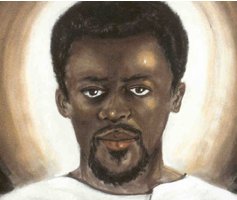
Megyn Kelly says this Jesus can’t be Jesus

“Jesus was a white man.”

Megyn Kelly of Fox “News” asserted this as  “verifiable fact” in the midst of an asinine conversation about the ethnicity of Santa.

When I heard about it,  I  posted a mini-rant on Facebook:

Megyn Kelly (of Fox “News”) insists that “Jesus was a white man.” I’ll blog about this when I have more time because it is worth refuting in detail, but Megyn, the Bible is silent about Jesus’ ethnicity (except of course that he was Jewish) because IT DOES NOT MATTER. It’s kind of a wonderful thing we don’t know what Jesus looked like, because everyone can picture him as “like me.”

And Megyn, you’re apparently not the brightest light on the tree, but it should be obvious that the odds of Jesus being “white,” living in the Middle East 2000 years ago and all, are pretty slim.  As a Christian, this offends me more than all the Happy Holidays faux “War on Christmas” stuff ever did or will. For a white person to claim Jesus as definitively another white person is idiotic, offensive, and racist.

But “news” shows like Megyn Kelly’s thrive on outrage and the publicity it generates.  After a night’s reflection, I thought that rather than add to the shouting match I would try to restrain the snark and post a reasoned response.  Let’s see how I did . . .

Look, it doesn’t matter what color skin Jesus had.  But it does matter, a great deal in fact, that we don’t know.

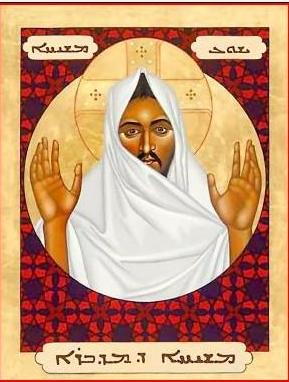
Megyn says “No Jesus” to this one as well

One of the wonderful things about the Gospel accounts is that none of them ever give a physical description of Jesus.    In fact, other than a prophesy in Isaiah about the Messiah being unattractive (which led to depictions of Jesus with kyphosis and other disabilities in the early church ), nowhere in the Bible is there any hint as to what Jesus looked like.  Maybe more surprisingly, there is no existing description or drawing from Jesus’ time.  (There used to be descriptions floating around attributed to Pontius Pilate or to a Roman soldier, but they have long been demonstrated to be forgeries produced centuries later.)

What would Megyn say about THIS Jesus?

I don’t think it’s an accident that God has not been specific about Jesus’ appearance.  No one culture or ethnicity can claim Jesus as “theirs” to the exclusion of others. 

Like Megyn Kelly tried to do for the white people.  Never mind that “white” is an artificially manufactured construct with no real biological meaning.

People who identify as “white” have long tried to claim Jesus as their own in order to justify their privilege. According to Edward Blum, one of the authors (along with Paul Harvey) of  The Color of Christ: The Son of God and the Saga of Race in Americamaking Jesus white was one way black slaves were indoctrinated with inferiority.  After the Civil War, keeping Jesus white was essential to the Klan’s message of White Supremacy.

Close, but Not Megyn’s Jesus, either

It’s no surprise that Fox “News,” with its fear-mongering about undocumented immigrants, would be the source of the white Jesus assertion.  Again according to Blum, Americans were fine with a Jesus of color until the late 1800’s when folks became concerned about too many immigrants “changing the face of America too much, changing it racially.”  Sounds like some of today’s rhetoric about immigration, doesn’t it?  So, “Religious writers and artists who were advocating for immigration restrictions began to depict Jesus with blond hair and blue eyes.”

There is power in claiming Jesus as one of “our” own – the power of racist superiority and xenophobia and oppression.

That type of power is the antithesis of a baby lying in a manger.  Whatever color skin Jesus had, that baby was a poor Jew born to an unwed mother in an occupied country.  Jesus came into the world in circumstances about as far away from power and privilege as you can get.  For a privileged white person like Megyn Kelly to state unequivocally that Jesus is “one of us” is not just offensive, it’s bad theology. It’s also bad history and geography.

Remember, Jesus was a middle-eastern Jew born 2000 years ago.  The odds of his not being a person of at least some color are pretty long.  In 2002, Popular Mechanics published a reconstruction of what the typical 1st century Jew in Palestine would have looked like:

face-of-jesus-01-0312-mdn

Definitely not a White Jesus

That’s not what most would call a white guy.  He’s more like someone folks who are nervous about flying with “those people” would like to see taken aside at the airport for a strip search. But we don’t know for sure.  So there’s nothing wrong with depictions of a “white” Jesus, or an African Jesus, or an Asian Jesus, as long none of them are put forward as the definitive Christ.

I’ll let a wise Presbyterian preacher from the 1880’s have the last word on the subject:

If He were particularised and localised—if, for example, He were made a man with a pale face—then the man of the ebony face would feel that there was a greater distance between Christ and him than between Christ and his white brother.’ Instead, because the Bible refused to describe Jesus in terms of racial features, his gospel could appeal to all. Only in this way could the Church be a place where the ‘Caucasian and Mongolian and African sit together at the Lord’s table, and we all think alike of Jesus, and we all feel that He is alike our brother’. Amen!

—-

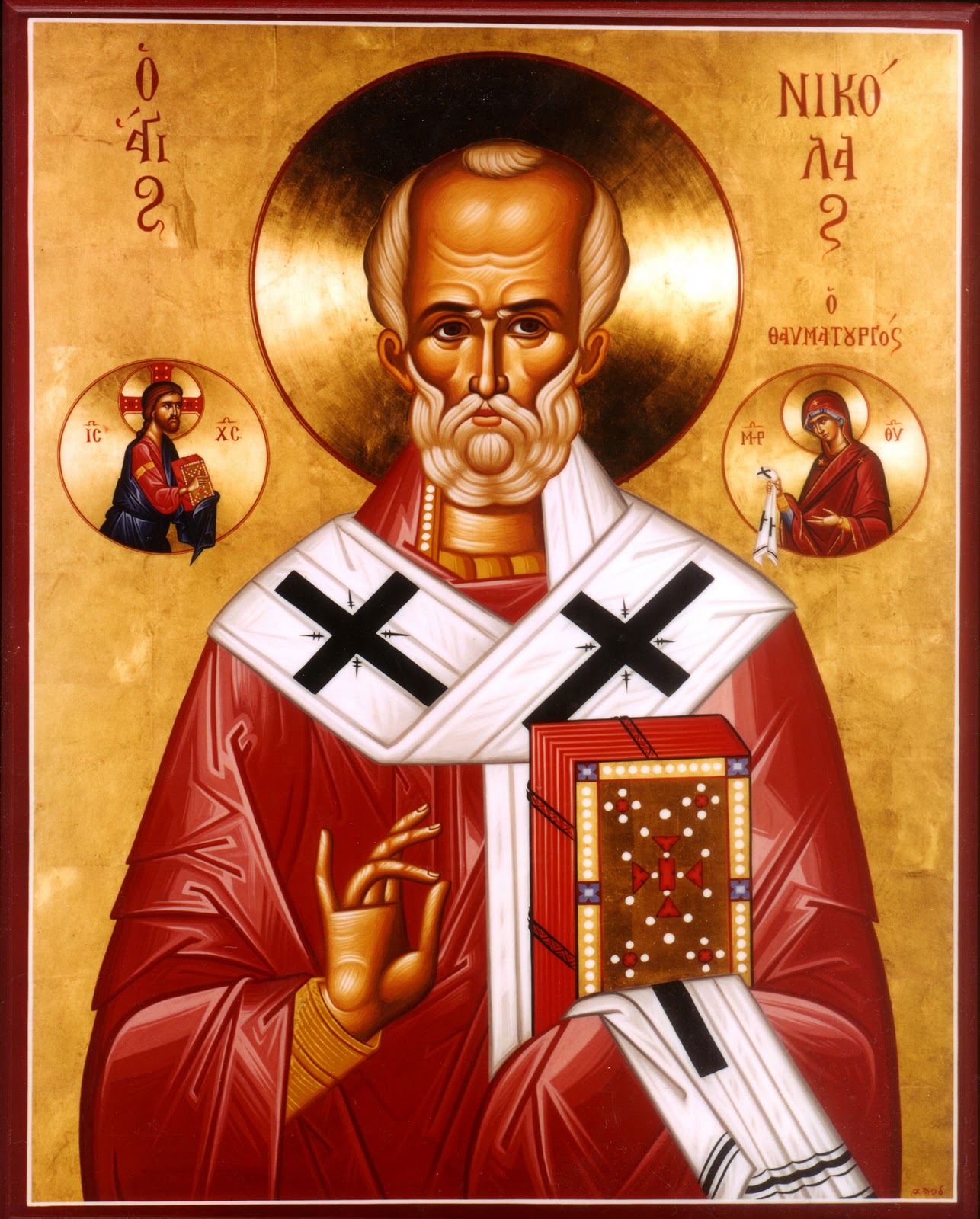
St Nicholas - Also Not A White Guy

St. Nicholas – Also Not a White Guy

And as for Santa . . . he’s based on St. Nicholas who lived in Turkey, so please tell Megyn Kelly he probably wasn’t a white guy, either.  Kids who can handle a magical Santa who appears in many places at the same time can handle a Santa who can take on the appearance of any and all children.

Posted in Christianity, Christmas, Racism | Tagged , , , , | 1 Comment

My Christmas Top Ten

My parents didn’t spend a lot of money on record albums when I was growing up.  They mostly listened to the radio.  But after Thanksgiving, we would pull down the box of Christmas albums out of the attic and for the next month our house would be filled with the sounds of the season.  Music has always been a big part of what makes this time of year special.

Today’s a snow day here in Maryland and I was looking through my own collection of Christmas music. Just for fun, I thought I’d post a few of my favorites, maybe some you haven’t heard.  Click on a title to open up another tab or window with the song.  I hope you enjoy these, and will add some of your own in the comments.

Go Tell it On the Mountain
– Mahalia Jacksonmahalia jackson go tell it on the mountain

I have two versions of Mahalia Jackson doing this song.  One has a choir and an orchestra, but the linked one is by far my favorite – no backing vocals, just Mahalia belting it out over some funky organ.

Hark the Herald Angels Sing
– Julie Andrewsjulie andrews hark

Nothing really special about this song, but it reminds me of every Christmas record giveaway from gas stations and tire stores my parents collected when I was a kid.   It’s just Julie and a horn-heavy orchestra, with a weird echo like it was recorded on the mountain at the beginning of the Sound of Music.

Sleigh Ride
boston pops christmas– Arthur Fiedler and the Boston Pops

Not technically a Christmas song, but certainly a classic, whip sound effects and all.  This version is particularly meaningful to me because my dad loved the Boston Pops and watched them most Sunday nights on PBS.

Christmas Time is Here Again
– The Beatles

beatles christmasEvery year during their time together, The Beatles released a Christmas 45 for their fans.  They started simply with some ad-libbed greetings around a studio mic, but grew in complexity.  When I was in college in the early 80’s I found a bootleg record with all the Christmas records, and we listened to it over and over in the dorm.   The 1967 version, with Monty Python-type bits built around the repetitive “Christmas Time is Here Again,” is the best.  It’s  funny, sometimes psychedelic, and has other pieces of “great” songs like “Plenty of Jam Jars Baby.” (For an example of the earlier, simpler Christmas releases, here’s an example from 1965.  If you liked the 1967 version, also check out Everywhere It’s Christmas from 1966.)

Hallelujah Chorus
handel's messiah a soulful celebration– from Handel’s Messiah, a Soulful Celebration

From 1992, this is one of my favorite “modern” Christmas albums.  It’s  a reinterpretation of Handel’s Messiah by African American artists with styles from Ragtime to Jazz to Hip Hop.  The finale of the album is this rendition of the Hallelujah Chorus by a hall of fame of Gospel artists conducted by Quincy Jones.

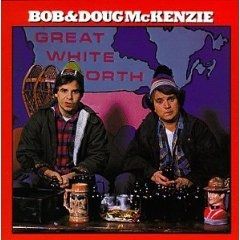
12 Days of Christmas
– “Bob and Doug McKenzie”

bob and doug mackenzieRick Moranis and Dave Thomas of SCTV portrayed these “hosers” from the Great White North.  Their reworked “12 Days of Christmas” still gets a chuckle, but it’s not as funny as it seemed in 1981 when I was in college.  I now disagree with Bob McKenzie’s assessment at the end of the song – “I think it ranks up there with Stairway to Heaven,” but it’s still not Christmas without hearing it a few times.

The Little Boy that Santa Clause Forgot
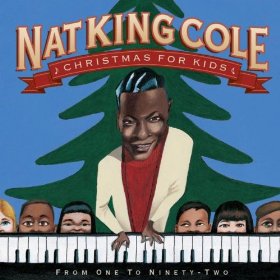
nat king cole christmas is for kids– Nat King Cole

What a sad song!  “I feel so sorry for that laddie/He hasn’t got a daddy.”  But I think hearing it over and over each Christmas growing up gave me at least some idea that there were kids out there who were not as blessed materially as I was.

This song was on my favorite Christmas album, “Christmas Is for Children.”  We had that one for as long as I can remember – I was young enough when we got it that when I asked my mom who that was singing and she answered, “The late Nat King Cole,” I thought the poor man may not be on time, but he sure can sing.

This song gets extra points because the Vera Lynn version is playing at the beginning of “Pink Floyd’s the Wall” (the film not the album).

Mary Did You Know
– Kutless

kutless christmasThere have been lots of versions of this poignant Mark Lowry and Buddy Greene song, but I like this one by Kutless the best.  It gives an edge appropriate to the less than ideal conditions around the manger instead of the usual syrupy interpretations.  The song itself has  great incarnational theology – “Did you know, when you kissed your little baby, you kissed the face of God?”   And also hints of the Cross to come – “Did you know the child that you delivered would soon deliver you?”

I Want a Hippopotamus for Christmas
i want a hippo for christmas–  Gayle Peevey 

I know lots of people are irritated by this song.  I think it’s a lot of fun (like Christmas!).  It’s on the list mainly in appreciation of the rhyme of “rhinoceroseses” with “hippopotamuseses” and for the educational value of learning that hippos are vegetarians.

The Christmas Song
– Nat King Cole

The definitive version of the definitive Christmas song (by Mel Tome and Robert Wells).  What else is there to say?

nat king cole the christmas song

Posted in Christmas | Tagged , , , , | 2 Comments

Christmas: Bill O’Reilly and Sara Palin vs. Jon Stewart . . . and Pope Francis?

jon stewart christmas“I thought Christians used to complain their holiday was getting too commercialized.  Are those days gone?”

Good question, Jon Stewart.

On the December 3 edition of The Daily Show, Stewart engaged in what he acknowledges is a yearly “dance” with Bill O’Reilly and other Fox News bloviators about the supposed “War on Christmas.”  I’ve blogged my feelings about this faux war in the past, but what was compelling about The Daily Show’s latest entry in the “World War C” chronicles was that their satire clearly revealed the biggest threat to the meaning of Christmas is from those who most loudly claim to protect it.

Stewart called out O’Reilly and others for their rants about department stores that have the temerity to substitute “holidays” for “Christmas.”  The underlying message of Stewart’s biting commentary was this: Why are Christians so concerned about what department stores are doing, anyway?  Isn’t materialism sort of antithetical to what Christmas – and Christ – are all about?

Jon Stewart and Hello Kitty Crystal Snowman“You’re upset with a department store because in their effort to get you to buy a Swarovski crystal Hello Kitty Snowman Figurine they’re not invoking Christ’s name enough?”

Soon came a clip of Sara Palin  saying, “I love the commercialization, it spreads the Christmas cheer.”

Stewart’s mock exasperated response: “So commercialization is what’s spreading Christmas cheer?  All right.  I’ve been so confused about the message of that holiday for so long.  I thought it was about opening one’s homes to friends and family not opening one’s present then returning it for store credit.”

The coup-de-grace of The Daily Show piece was setting Pope Francis against the supposed defenders of Christmas. “Look, if the true spirit of  Christmas is best spread and expressed by commercialism and materialism, then anyone who denounces those things is by the transitive property waging war on Christmas.  Sara Palin, Bill O’Reilly, meet your newest nemesis . . .”

What followed was a montage of news clips about Pope Francis denouncing commercialism and materialism.

Jon Stewart shook his head and asked,  “When will the pope stop his war on Christmas?”

Brilliant!  It’s sad, though, that it takes a secular program with a Jewish anchor to remind Christians that we’re way off track with our wailing about the “War on Christmas.”

If there is such a war, it is not that stores have “Holiday Sales.”  It is that those stores and their sales have become so important in the first place.

“Christmas magic” is a great price on a big-screen TV.

Without mindful attention, that gaudy magic threatens to overwhelm the real miracle – the miracle of God become human, born not to a family who could have afforded to shop, shop, shop, but to an unwed mother and laborer father.  God become a human who would grow up to be a homeless man.

Perhaps rather than worrying about how the Target cashier greets us, we would better spend our time meditating on this work of art, recently blessed by Pope Francis,  which says more about the meaning of Christmas, and about Christ, than all the pious utterances of the stalwart “defenders of Christmas.”

Jesus the Homeless by Timothy Schmalz

Jesus the Homeless by Timothy Schmalz


Posted in Arts and Culture, Christianity, Christmas | Tagged , , , , | 1 Comment